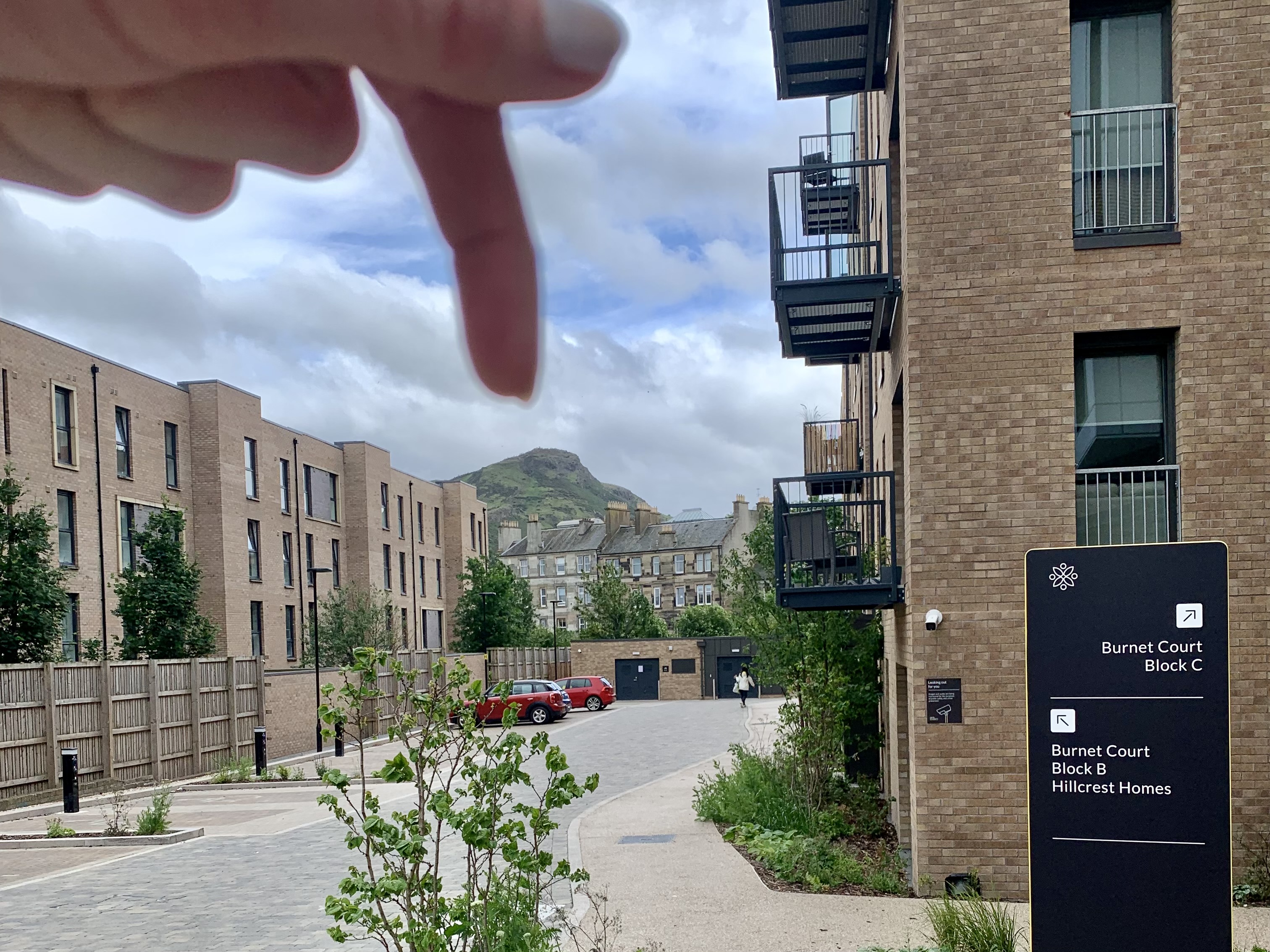
Last week I was in Edinburgh at the Design Research Society conference. DRS is the largest international conference in the field of design research. And this time, there was also a special track dedicated to public design—my area of focus—that ran throughout the week.
I was there myself to present my paper on human-centered design in government. But I also attended a lot of other presentations, and I really enjoyed seeing what others were doing.
In no time at all, you’ll form a little group with other PhD students and researchers, and you’ll even have dinner with them after the presentations. Usually, I’m sitting alone at my desk working, so I don’t really get to see what other PhD students are working on. This time, there were researchers from Erasmus, Eindhoven, the VU, and, of course, a whole bunch from Delft.
In this blog post, I’ll share a brief overview of what I took away from the presentations.
Want to follow my research and never miss a blog post? Subscribe to my monthly newsletter.
Public design seeks legitimacy
At a conference like this, an enormous number of papers are presented, so you quickly start looking for the ones that interest you most. My own research focuses on how human-centered design can be embedded in government as a method for creating services that benefit people.
That was also the topic of the paper I presented myself: “From Lab to Line: Mechanisms for Anchoring Human-Centered Design in Public Policy and Service Development.” I’ll be posting an easy-to-read summary on this blog soon. If you can’t wait, you can download it here.
I soon noticed a pattern in what I was taking away from the other presentations. They were all really about the same question: How can design gain legitimacy in the public sector?
So: Who is actually allowed to design here, on whose behalf, based on what, and how does that relate to policy, politics, institutions, and democratic decision-making?
The government operates within the framework of public values, political decisions, laws, implementing agencies with their own systems, lines of accountability, and people who cannot always choose whether or not to use a service. That is what makes public design interesting, but also complicated.
While in recent years the focus has often been on the differences between design and the civil service, and on how we can help civil servants work in a more “designer-like” way, the discussion now also turned to something else: how design itself must change to fit into the public sector.
Not another design gathering dust in a drawer
Geert Brinkman and Elke Wennekers from Erasmus Rotterdam presented a paper with the fantastic title: “Not another design that ends up in a drawer.” Their paper explores how designers try to gain legitimacy for the outcomes of their work—not just for the design approach itself, but for what results from it: a proposal, an intervention, a new process, or a new perspective on the problem. They identified various mechanisms designers use to achieve this. For example, by making something conceivable or by aligning with the language and values that people in the organization are already familiar with.
Designers sometimes think that the quality of their insights is enough on its own. “Look, this is what citizens are experiencing.” But in a public organization, such insights need to be put into practice somewhere. With a manager. In a policy process. In a decision-making chain. In a budget. In a team that will eventually have to implement it.
So a good design is not automatically a legitimate design. You must be able to explain why this design aligns with the organization’s mission, the law, the political mandate, and the people who will be working with it.
Viewing Design Through a Policy Lens
Another paper they wrote, together with Jotte de Koning and Arwin van Buuren, was about how to apply policy models to design. I thought that was an interesting twist. We often do it the other way around. We try to explain to policymakers what design is. Then we bring up “designerly ways of knowing,” double diamonds, reframing, co-creation, iteration, abduction, and prototypes. Using words like these often creates a sense of distance. It quickly turns into: “We designers are here to explain how the public sector needs to change.”
Elke explained that policymaking itself is also a form of design. You try to transform an existing situation into a desired one. You weigh values. You devise tools. You try to influence behavior, organizations, and systems. You work with uncertainty. You make choices without knowing everything for certain.
In the paper, they use perspectives from public administration to examine systemic design: rational, political, cultural, and institutional. This sheds light on why design sometimes clashes in policy contexts. For example, something must be substantiated and justifiable, align with interests and power dynamics, be meaningful to the groups involved, and fit within countries’ routines, rules, and existing ways of working.

That evening, over dinner, we also talked about “silent design”: design that happens without anyone actually calling it design. I see that a lot in my own practice, too. Policymakers, implementers, and lawyers are constantly designing. They create regulations, forms, work processes, exceptions, consultation structures, service counters, letters, and dashboards. They just don’t usually call it “design.”
I previously wrote a blog post here titled “Silent Designers and Fluid Team Boundaries ” about how I see this concept of “silent design” reflected in my case study.
In short: sometimes designers don’t need to explain what design is more thoroughly, but rather need to better understand what policy is.
So what exactly does design contribute?
Amy Hyewon Lee from the UK presented a paper on how to understand the role of design in policymaking. This is an important question, because design is increasingly being used in policy contexts, but it remains difficult to demonstrate exactly what benefits it brings.
I recognize that, too. Sometimes you can point to a design approach that has brought about a change, but it’s almost never as simple as saying, “This one workshop made this policy better.” That’s not how policy works. And neither does design, for that matter.
Policy-making is messy. There are multiple influences at play simultaneously. Political timing. Media attention. Budget. Legislation. Organizations that may or may not go along with the changes. People who leave. People who keep pushing. A study that suddenly comes at just the right time. A prototype that suddenly shifts the conversation.
That is why Amy emphasizes the distinction between attribution and contribution. It’s not a matter of saying, “Design caused this.” Rather, it’s a matter of asking, “Where and how did design contribute?”
That’s a much better question. It takes design out of the realm of “just another fun method” and places it at the heart of the question of how policy is developed. Design then becomes a way to organize knowledge, collaboration, coherence, and change.
Public design needs to become more public
This theme also came up in other presentations. Saskia Pouwels from Eindhoven, for example, demonstrated (in a beautifully animated presentation) how citizen participation can get bogged down by project logic: there’s a schedule, a deadline, and a specific point in time by which “input” must be gathered, whereas people, communities, and democratic processes don’t always operate on a project timeline. My own paper, on the other hand, focused on how human-centered design can become part of the day-to-day operations of government organizations, moving beyond innovation labs and temporary projects.
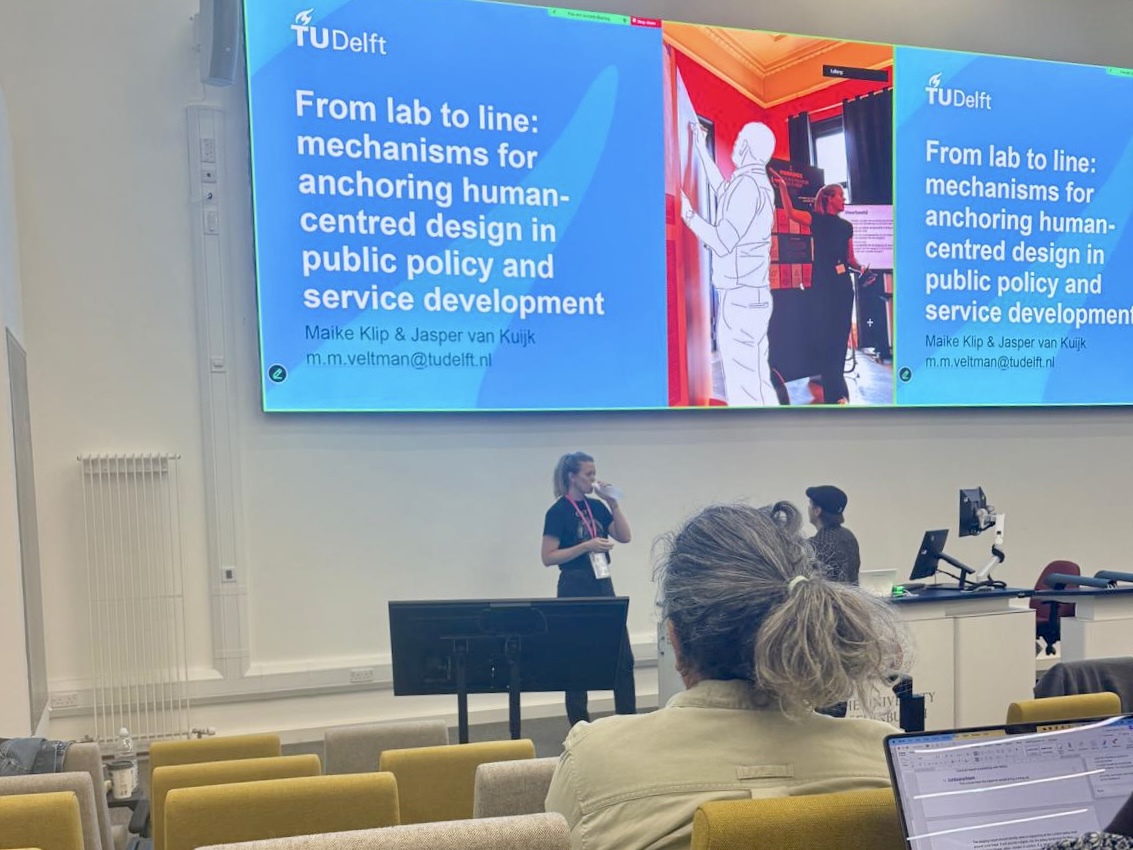
In Edinburgh, I noticed that public design is shifting as a result. Design methods and a “designerly” approach remain relevant, but the conversation is broadening. It’s less and less about how to do design in the public sector, and more about how design should relate to legitimacy, policy, power, and democratic processes. I think that’s cool.
Because if designers in the public sector want to be taken seriously, we must do more than just demonstrate that we can work with empathy, creativity, and an iterative approach. We must also understand what public organizations are built on. Why legitimacy matters. Why political decisions are sometimes already made. Why implementation can’t simply deviate from the plan. Why accountability is necessary. And why “putting the user first” isn’t automatically the same as public value.
So perhaps the next step for public design isn’t for the public sector to learn to speak more like designers, but for designers to become bureaucrats—as we so elegantly put it in government circles.