Categories
Promoklip

From the consequences of gas extraction to preventing debt: tips for the new Minister of Social Affairs

It’s funny when you follow a government official from one issue to the next. In this case, I’m talking about Hans Vijlbrief, the “Groningen guy” and now the new Minister of Social Affairs. It’s especially nice when a government official like that acknowledges that his views have changed, and he brings that new way of thinking and working to other issues—especially when you’re in the midst of writing your dissertation on that very approach.

If you want to follow my research, subscribe to my monthly newsletter.

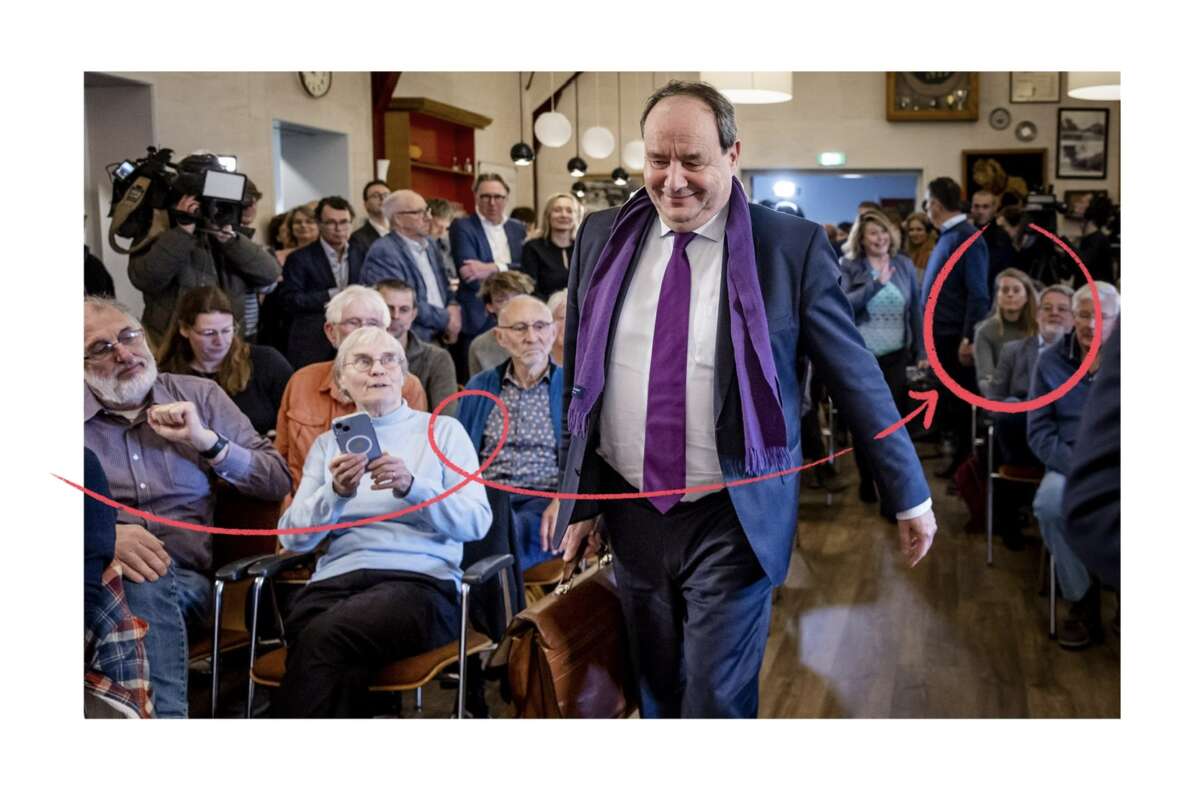
Five years ago, I worked for the National Ombudsman and investigated the consequences of natural gas extraction. Our recommendation to the cabinet at the time was to appoint a separate minister to address the problems in Groningen. That minister turned out to be Vijlbrief.

Right from the start, he decided to hold monthly office hours in Groningen. At the ministry, they thought this was a crazy and unsafe idea, he writes in his book about that time. Still, he pressed on, and in the months that followed, he spoke with many people who were dealing with damage to their homes and the need to reinforce them.

After leaving my position at the Ombudsman’s office, I volunteered at the Groninger Gasberaad. There, I saw firsthand how these discussions helped build trust in Groningen. This allowed Vijlbrief to gauge public reaction to policy ideas at an early stage among the people who would be directly affected by them.

Listening to the soft voice

Around that time, I shifted my focus to the debt sector myself; I began my doctoral research in late 2022. As a case study, I then spent 2.5 years working with the Clustering Rijksincasso (CRI) partnership, which has been part of Vijlbrief’s portfolio since this week. At CRI, I investigated how the government can design policies and services with a human-centered approach: involving users, thoroughly understanding the context in which the services are used, devising solutions iteratively, and then testing those solutions with the people who will actually use them. As you can see, there’s an overlap with what Vijlbrief was experimenting with in Groningen.

In his book, Vijlbrief writes about his motto, “listening to the soft voice,” noting that he “has been changed as a person and as a politician by Groningen” and that “that lesson has broader applications.” Amen, brother. In my research, I see how listening to people can be made the standard approach for policy and public services within the government.

So, for him—and all the new ministers and state secretaries—here are 5 insights from my research to help them get off to a flying start in the coming cabinet term.

First: What is human-centered design?

Human-centered design is an approach to work in which you create something from the perspective of the people who will use it. Their experiences, needs, and context are not the end goal but rather the starting point for decision-making.

It means that you don’t just check whether a service is legally sound or technically functional, but also examine how policy plays out in everyday life. You make assumptions explicit, involve users early and repeatedly, explore tensions between rules and reality, and iteratively adapt solutions based on what you learn.

Human-centered design, in theory

In my research, I use the ISO standard for human-centered design. It outlines six principles, which I have previously discussed in detail on this blog, along with examples from my research:

How I Conducted My Research

At CRI, I worked for 2.5 years as an action researcher, collaborating with various teams that developed services for citizens with payment arrears, such as “Mijn Betaaloverzicht” and the “Betalingsregeling Rijk.” I observed how they gathered feedback from the field, used it to address collection and debt recovery services, and established partnerships with other organizations in the chain. I saw how they realized they needed a new mandate, funding, and policy. So, as a researcher, I followed them from implementation to policy, delved into political communication alongside them, and even interviewed a member of parliament.

I was allowed to observe everything and kept a detailed journal. The research could be (and still can be) followed through my monthly newsletter, in which I transparently reflected on every step.

Then there is the implicit question that Vijlbrief asked himself in his book: How can his lessons from Groningen be applied more broadly? Or, as I would like to phrase it in my dissertation: How can you design with people in mind within a complex political-administrative system?

1. Make it the norm to engage users

At the ministry, they initially thought it was a very unwise idea for Vijlbrief to hold office hours in Groningen. Can you really guarantee safety? What if, by listening and showing people things, you end up raising their expectations? In government, we find it very nerve-wracking to just strike up a conversation with people. As a user researcher working on my PhD, I’ve run into this myself many times.

But if we don’t talk to people, we have no idea what they need, and we can’t create something that meets those needs either.

In my research, I noticed that it was standard practice for the Mijn Betaaloverzicht team to meet with potential users every 3 weeks and publish their feedback openly. Mijn Betaaloverzicht is a digital application that allows citizens to view their payment arrears in a single overview and will become available to an initial group of users in 2026. Testing with real people is part of a regular work routine and makes it second nature to base decisions on user insights.

To make this the norm, there are two things you can do as a minister.

  • Talk to the target audience yourself and ask your employees to actively seek out feedback and pass it on to you. After all, if the minister asks for it, everyone will spring into action.
  • Give people the authority and freedom to adjust processes so that it doesn’t stop at occasional feedback. More on that in the third point.

2. Establish a mandate for usage preferences

Knowing what people need is important, but that doesn’t mean you can just act on that knowledge. To do so, implementing organizations need a mandate. And no one is better suited to secure that mandate than a government official.

You’ve already sent your people out into the field; now what they learn there needs to have an impact on policy. Compile the insights, back them up with data, and then bring them into the political conversation yourself: in the Cabinet, in a letter to Parliament, and in debates. Then give the implementing agencies a formal mandate (and funding) to act on the basis of those insights.

Here’s an example: as the CJIB began handling more and more debt collection cases on behalf of other organizations, they noticed that some citizens had overlapping debts. Someone might have both a health insurance payment in arrears and a traffic fine or an overdue student loan. This overlap could cause people to fall further and further behind.

To gain a better understanding of this, the CJIB asked the CBS to use data from service providers to assess the extent of this problem, which resulted in this dashboard. By making the overlap so clear, the minister at the time was able to put the issue on the agenda, and a political mandate to address this problem was inevitable. That worked out well, because the CJIB, DUO, and CAK were actually already prepared with a first version of a joint payment plan, for which they needed a mandate to offer it to citizens.

3. Take small steps

An iterative approach is essential if you want policies and services to align with users’ lived experiences. You only know if something works once you test it, and through testing, you often discover things you need to do differently. An iterative approach is therefore also uncertain. You don’t know in advance what something will be like when it’s finished. You take a first small step, and then immediately make adjustments. What if you already said “A” in a letter to Parliament, and now, after a round of testing, it turns out that “B” is actually better? This uncertainty makes it difficult for many policymakers to “steer” the process.

It works well if you agree in advance that uncertainty is okay and that everything doesn’t have to be finalized all at once. In my research, I found that—especially in projects involving policy changes—progress often stalled during lengthy coordination rounds. To keep the momentum going, the team working on the joint payment scheme scheduled a fixed annual meeting for policy updates at a certain point. This allowed them to take a step forward each year, created space to systematically incorporate user insights, and enabled the program to be expanded each year to include more and more organizations and citizens.

Don’t expect major “big bang” moments. Embrace the process of taking small steps. In fact, get actively involved and adopt an iterative approach to politics as well.

I realized that small, tangible results were more effective than long-term plans. Small steps were easier to “align” with the overall strategy, provided room for practical testing, and made the next step seem logical, because: this is how we do it now. The same mechanism worked politically as well: through letters to the Stas or the House of Representatives, operational steps also became political realities.

This is learning by doing. By linking each step to what has been proven to work in practice, you continually renew your mandate. Members of Parliament cannot see what happens within the government, but they can see what actually reaches people at home. Once a small step has been taken, you can build on it, as was the case with the expansion of MijnBetaaloverzicht to more government agencies through the Kat/Kathmann motion. This is a next step the team can tackle.

4. Make decisions based on the citizen’s overall experience

In Groningen, the case file consisted of an administrative tangle involving two ministries, multiple implementing agencies, national and local government, and all sorts of other parties that were entangled in and around the issue. It’s no different for people in debt. There are now sometimes multiple government agencies competing with one another to collect debt from the same person. This often only makes people’s problems worse, as I saw when I spent a day shadowing a bailiff.

The goal of the “Clustering Rijksincasso” program is for creditors to simplify this tangled web into a single, clear relationship between citizens and the government. Each citizen is one person and has one wallet.
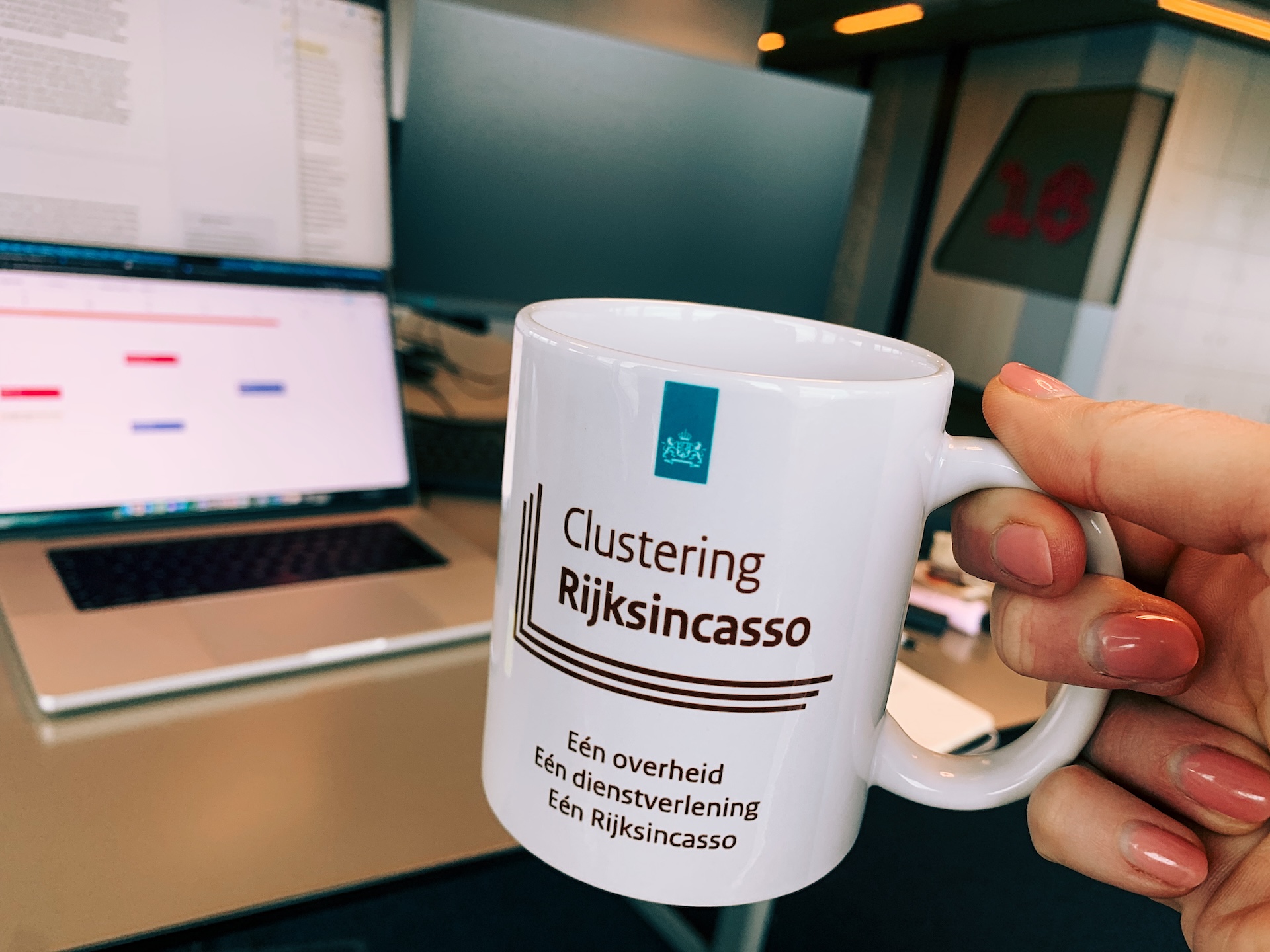
1 government – 1 service – 1 government collection

To break down this fragmentation, we must design with the user’s entire experience in mind. This requires collaboration across legislative frameworks, funding streams, and lines of accountability. Tools such as the CBS dashboard help make the shared problem visible and unite decision-makers around a single vision. But the larger the scale, the more demanding the coordination and political maintenance required to maintain coherence.

Take the citizens’ overall experience as your starting point and make decisions that span different domains. Choose organizational structures that can orchestrate this design process like a conductor.

I find it very promising that Vijlbrief has taken on “separate” policy issues such as the right to exist, purchasing power, poverty, and debt.

5. Implement changes directly in the production line

We often set up new ways of working as separate projects so that the core operations remain protected. In the public sector, we can’t afford to follow the tech bro motto “go fast and break things.” That’s why we often feel the need to ensure that innovation and change are completely safe before we implement them.

In my research, I found that combining these approaches works well. Safe lab settings provide room for exploration, citizen engagement, and generating new ideas. But this lab setting shouldn’t be too safe or isolated, because then it won’t reach the public. To achieve that, you have to work as closely as possible to the front lines: to translate results into policy, systems, and (political) accountability. And so that citizens can actually apply for a new program or, for example, view their payment statement on their phone.

People-centered design requires innovative settings that aren’t too safe and policy implementation processes that aren’t too rigid. Create space for learning within the process to bring about change in small steps.

Continue reading?

This summer, the first of two academic articles using the Rijksincasso clustering project as a case study will be published, in which I will share the insights mentioned above in detail, among other things. If you’d like to receive it in your email (along with the accessible summary) as soon as it’s published, please subscribe to my newsletter.

Other recommended reading:

  • Hans Vijlbrief (2024). The People of Groningen Were Always Right, Prometheus Publishing.
  • Trust alone is not enough. Summary of the first article from my PhD thesis on eight years of practical experience in public service. Topics include the student loan system, the CoronaMelder app, and how civil servants make well-considered decisions.
Categories
Promoklip

How Services Add Value

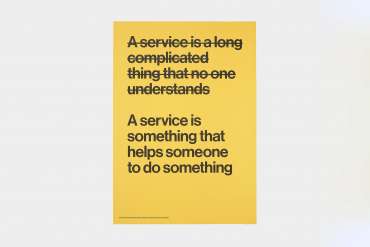
When is a service valuable? For example, if someone can apply for, change, or cancel a benefit without getting stuck, then we’re doing it right. Find the right button. Complete the application. Money in the account. That’s valuable, right?

In conversations with former students when I worked at DUO, I sometimes noticed something strange. People didn’t just want to talk about their student debt and how to manage it through the portal; they also wanted to talk about their mortgage and whether they’d be able to buy a house “later on.” My immediate reaction back then was: I understand, but that’s not our area of expertise. That’s not part of our service.

I’m currently conducting scientific research on how to create valuable government services. I now view it differently. A while back, I conducted a survey among the readers of my newsletter. I asked them to tell me about one recent service they had used and what benefits it provided them. Their responses clearly reveal the various layers of value that services provide—or, conversely, undermine.

If you want to follow my research, subscribe to my monthly newsletter.

A stack of value

“I recently switched health insurance plans. I wanted to save money and found one that was cheaper. Switching was very easy; everything was clear. With the money I’m saving, I can now do fun things, and I’m still well insured in case something happens.”

As you can see, this service has a multi-faceted impact. The switch itself was a positive experience. And the results were positive: more money left over and good insurance coverage.

But that’s not always how it works. A service can provide value to you in the here and now, but come at a cost to society. And vice versa: some services are difficult, but so important that people struggle through them anyway, so they can still create value for themselves. (It’s a shame we put them through that, but oh well.)

Different layers

I cover more aspects in my PhD research, but for this blog post, I’ll highlight a few of them with some examples.

1. How you experience it

Was it a good experience, or not? Were you able to achieve the goal for which you used the service? Once you’ve struggled your way through a form, you may have technically checked off your task, but you’re also pretty annoyed.

“I still had to contact the city. This online form felt like an unnecessary detour because a real person probably could have told me this in less than 5 minutes.”

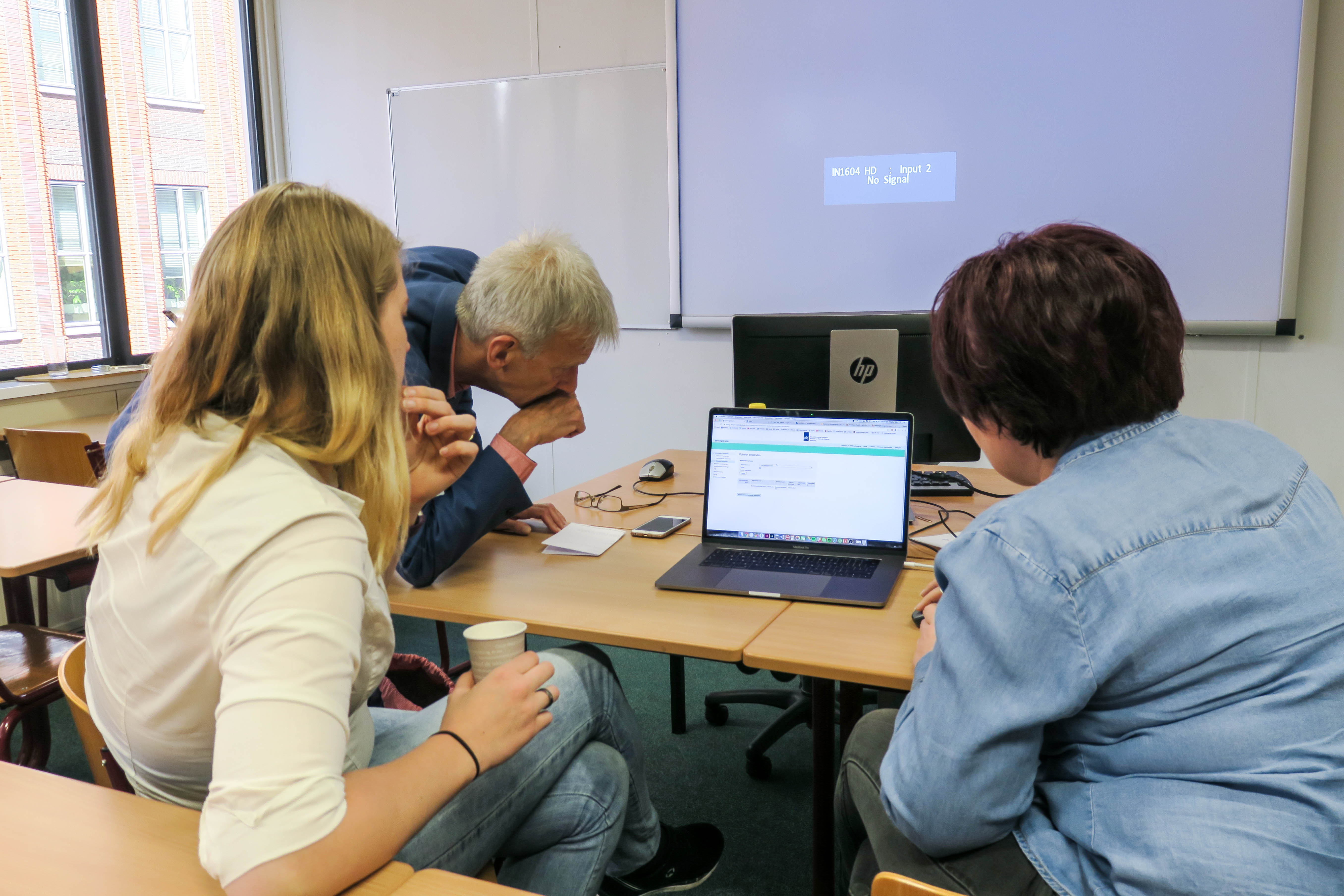
Testing screens online with users.

This first layer is the direct interaction between the organization and the service user. When this interaction doesn’t go well, it directly affects your perception of that organization. This is usually the standard UX (user experience) that we focus on in the public sector—and the one over which you, as a designer, have the most direct influence.

2. How you can use it in your life

Look, ultimately, it’s all about how a service fits into your life. Nobody buys a new washing machine just to look at it. No, you want clean clothes!

“I participated in the breast cancer screening program. I received an invitation in the mail along with an informational brochure, and I made an appointment online at a nearby location. After the appointment, I received the results in writing.” Of course, my goal was to prevent myself from getting breast cancer.

In academia, this layer is also referred to as “value-in-use.” And “use” here does not mean using a portal or service counter, but rather using the service in your daily life. Using the child care subsidy so you can work, using student aid to pay your tuition or rent, or not just applying for a permit, but looking out the window of your new dormer with a cup of coffee in hand.

This is where the government really needs to deliver. It’s great if your website is user-friendly, but ultimately, it’s all about delivering on your promises.

3. What You’ll Learn for the Future

Some services teach you a few tricks for next time. Your ability to handle certain tasks on your own later on—like filing your tax return—improves. You now know how it works. For services you only use once—like when you apply for a permit for a dormer window once every 10 years—this isn’t necessarily needed.

But consider young people who have their first experience with a government office at DUO (student financial aid) or the RDW (driver’s license) and learn there how interacting with the government actually works.

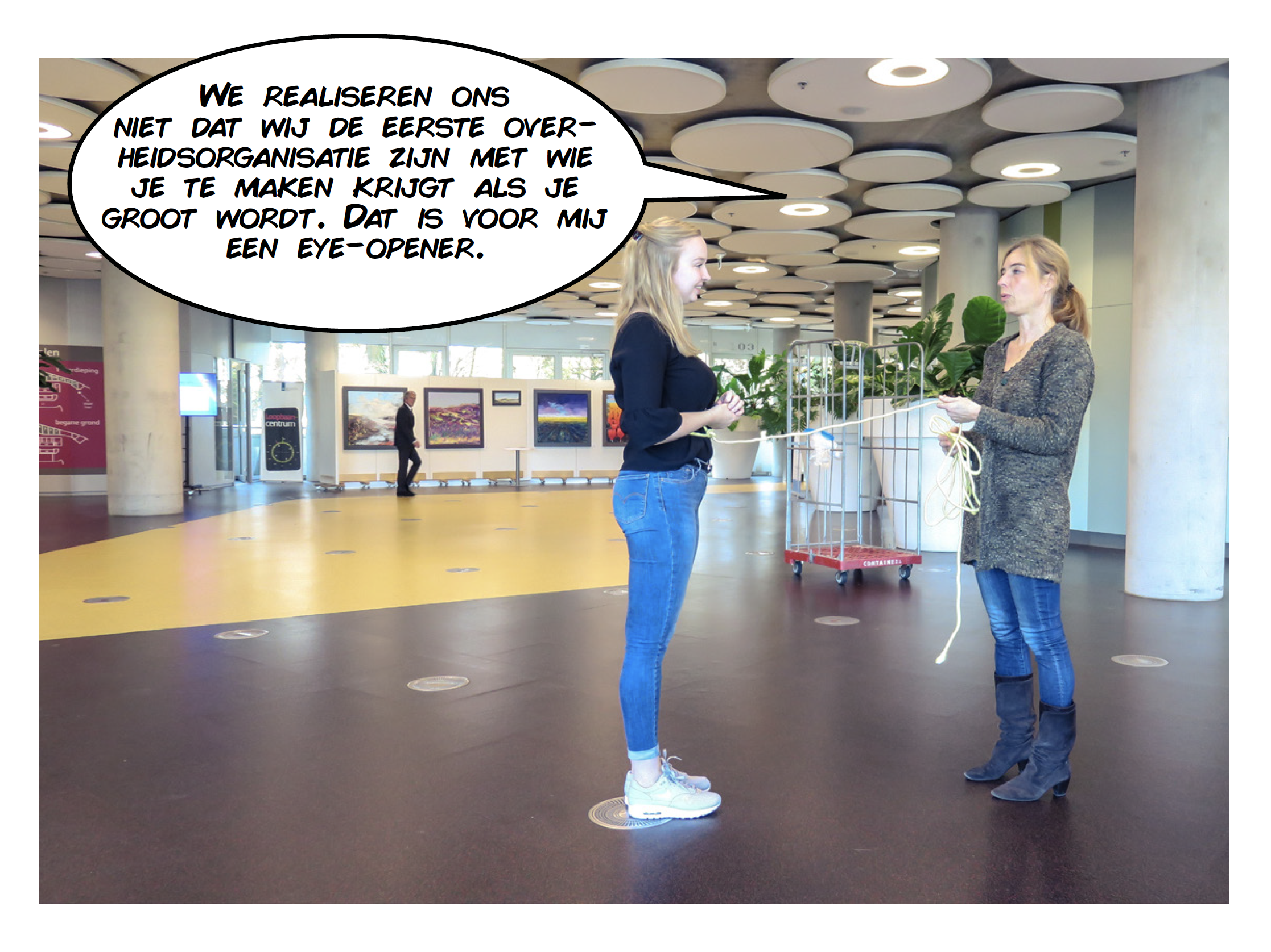
Colleagues at DUO reflect on the connection they have with students.

4. How it affects the people around you

You may be the one who arranged everything and actually uses the service. The benefits usually extend beyond just yourself. Often, financial assistance you can receive from the government applies to your entire household. Or conversely, if your daughter can set up a payment plan for a debt, that also gives you, as a parent, peace of mind.

“My father-in-law passed away, and I had to report it. Fortunately, the process was straightforward, even though he was abroad when it happened. This saved our whole family a lot of hassle during a difficult time.”

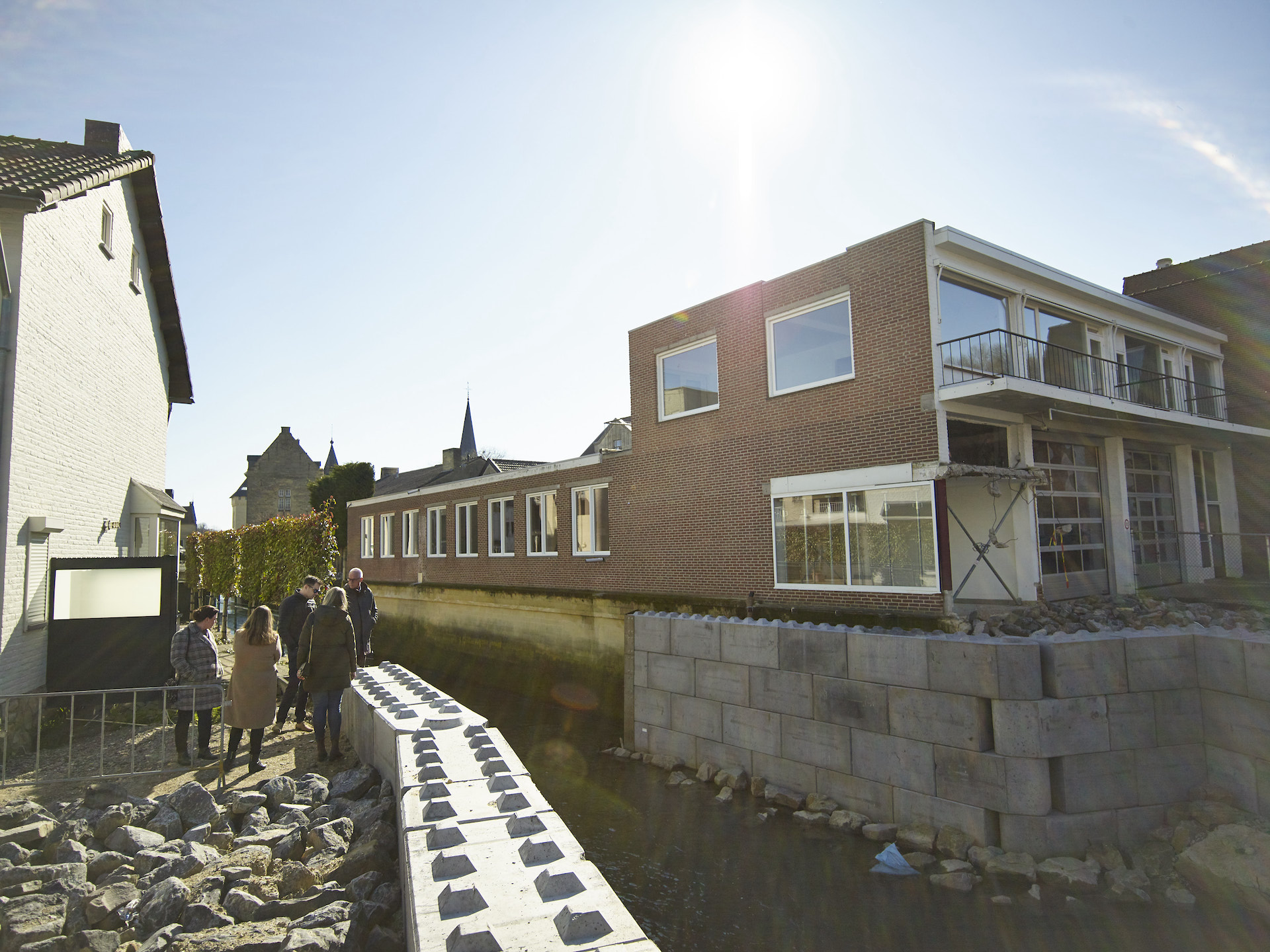
During last year’s flood, a quay in Valkenburg collapsed and has now been temporarily repaired by the Water Board. The building on the right is vacant, and its facade is still leaning dangerously downward.

The value that a service can provide can also help your neighbors, the entire street or neighborhood, or another group you belong to. Consider the response to the floods in Limburg in 2021, which I wrote about earlier. There are several streets here where, at almost every address, someone is filling out all kinds of forms or on the phone with government agencies. They’ve all been through something together, and one person’s experience with government services (and the results!) influences the experience of others.

5. How it contributes to society

Of course, this is what many policy officials are concerned with. This is being debated in parliament and local council chambers. What kind of society do we want to be?

“I went for a blood test to find out if I can have another round of chemo tomorrow. My value to society… Oh, that’s a tough one. I’m costing society a lot of money with this treatment. But it does give me a better chance of getting better and, hopefully, being able to do useful things for society for many years to come?”

And that’s exactly right—access to medical care and a healthy population are, of course, a one-on-one social value!

Connected Layers

Of course, these aspects are not separate from one another. Accessible education requires that young people be able to afford school—and thus, for example, be able to apply for individual student financial aid. And every young person who attends school is one more person who, when added to the rest, contributes to a society where talents are put to good use.

But the difficult question is: how do you design for all those layers? Policy usually focuses on the group and the broader goals for society. And when designing interactions—such as service counters and forms—you typically do so by testing with “the user.”

How do you ensure that what we think is “good for people” actually gets created and also proves to be good for people in practice? Both for individuals and for the group?

And that brings me to two questions:

  • What layers of meaning does your work actually explore?
  • And how far do you think your influence and responsibility extend?

Want to read more?

  • I explored this concept of value earlier in the blog post: ” The Value Is in the Classroom.
  • This article describes some of the value dimensions I used in my research: Osborne, S. P., Nasi, G., & Powell, M. (2021). Beyond Co-production: Value Creation and Public Services. Public Administration, 99(4), 641–657.
  • I wrote an initial guide on how to design for that entire experience—and thus its various layers of value—in the blog post: “Start with Your Target Audience’s Entire Experience.”
Categories
Human-centered design

Quiet designers and fluid team boundaries

You can’t create a people-centered service on your own. In this blog, you’ll learn why it matters who you involve in the design of government services—and why that goes beyond just “a design team.” You’ll also discover what you’re missing if lawyers and administrators aren’t involved.

Want an update in your mailbox every month about my research? Then subscribe to my newsletter.

Stickers on the laptop

What perhaps surprises me most about the team I’m part of now is how different it feels from the design teams I’ve worked on before. Back then, I was surrounded by UX designers, researchers, content designers, and—okay, maybe the occasional business analyst. Everyone spoke the same language, used the same tools, and had the same stickers on their laptops. These were teams where we usually got along great—if only because we shared the frustration of not making more of an impact within our organization.

A year and a half ago, I began my field research for my doctoral dissertation with the Clustering Rijksincasso program. Here, I don’t find a traditional design team like the ones I’m used to. In fact, no one here calls themselves a designer. There is one colleague listed as a “researcher,” but who clearly also works as a UX designer. The rest are process coordinators, lawyers, analysts, project managers, and product owners—people who are very hands-on and “simply” building services.

Whenever I ask about people-centered design—or, to use the jargon, “human-centered design”—in interviews, I invariably get answers like:

“Yes, but once you realize that a citizen only has one repayment capacity, it makes perfect sense. So why not just do it that way?”

Starting from a simple idea, they challenge the internal structure of the government, create space for new ways of delivering services, and don’t get bogged down in fancy jargon. No one has stickers on their laptops. Yet I knew right from the start: this is a team that designs people-centered services.

What makes a good design team?

The ISO standard on human-centered design states that a design team must incorporate multidisciplinary skills and perspectives. A design team does not need to be large, as long as it is able to incorporate all relevant perspectives into the design so that it aligns well with the users, their context, and their needs.

One of the strengths of design-based work is that it not only gathers different perspectives but also brings them together. Design makes it possible to bring together interests that at first glance seem contradictory—such as simplicity versus precision or enforcement versus service—into a solution that works. It is precisely when you bring these perspectives together within your team that space is created to make better choices collectively. A good design team, therefore, is not a collection of experts, but a collective that can shift between perspectives.

The team’s boundaries

When we think of a team, we often picture a small group of people working together. A team can also consist of a structure with different layers and subteams, which in turn form a team together. For each team, you can pool your expertise and perspectives in a very focused way.

At CRI, this is reflected in how the program works with ad hoc teams focused on specific issues. For example, there is a “small group” working on the legal framework for data exchange so that the Tax and Customs Administration and the Benefits Service can connect to the Central Government Payment System (BRR). This team includes colleagues from all three organizations.

Another ad hoc team consists of colleagues from DUO to expand their participation in the BRR. Where there is overlap with issues that the Tax and Customs Administration and the Benefits Service also face, a call is scheduled to brainstorm how they are addressing them. All of these people are working together to build this payment service. Team boundaries are fluid.

In fact, there is a strong sense within the program that anyone who contributes to the service is part of “Team CRI,” whether they work at CJIB, the Tax and Customs Administration, UWV, or DUO.

Quiet Design

I’ve noticed that in this program, people from all kinds of fields and roles collaborate on the services they create, without calling themselves designers. They don’t work in a secluded lab, testing ground, or internal UX club, but right in the thick of things. Yet they are indeed designing human-centered services. In the literature, this is called “silent design”—designing without people actually calling it that.

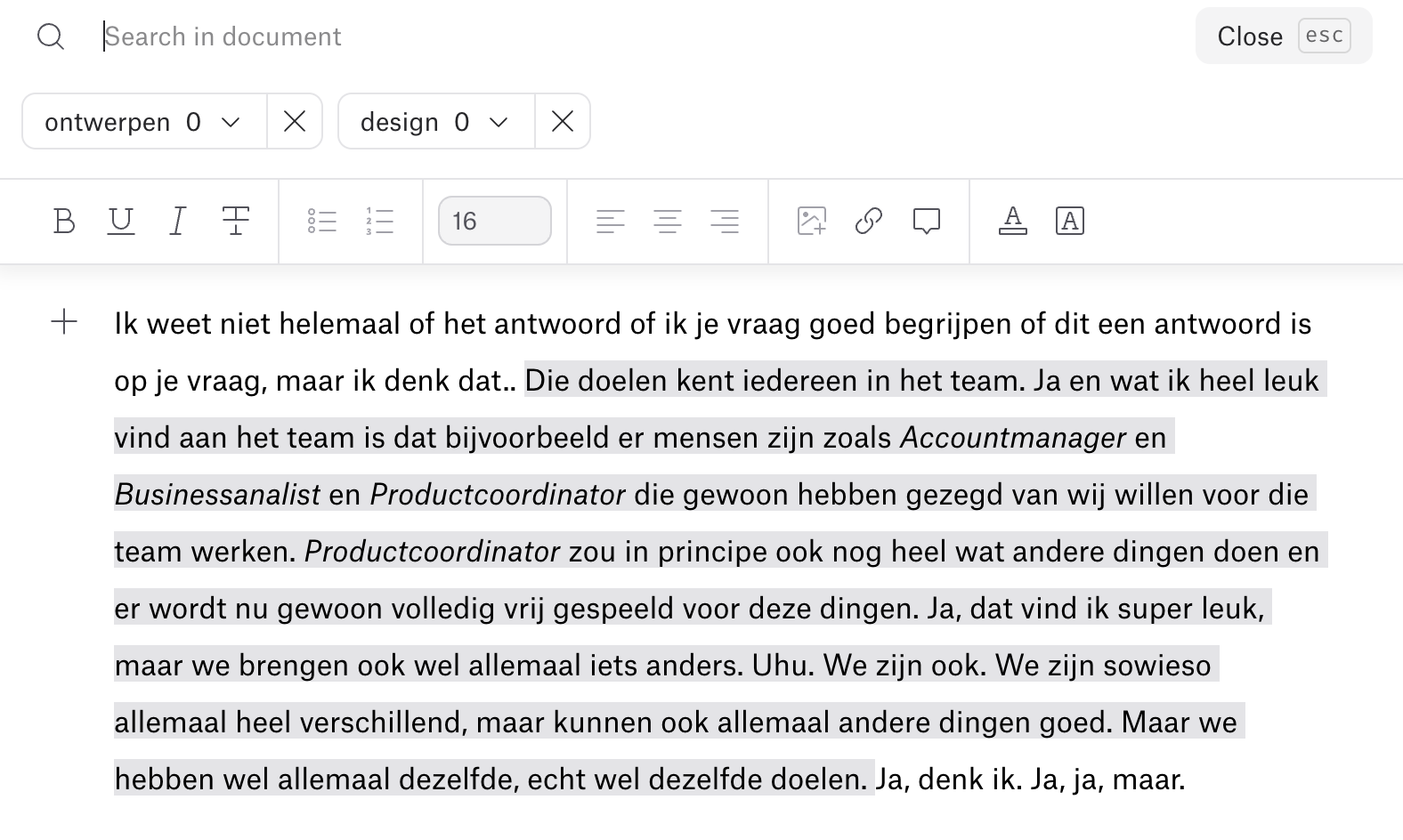
Excerpt from an interview with one of the team members. As you can see, the words “ontwerpen” and “design” don’t come up very often in the interview, but this person does describe how the (design) team comes together with enthusiasm.

The Forgotten Profession: The Lawyer

Interestingly, the ISO definition omits one profession that is indispensable within the government: the lawyer.

When it comes to public services, legislation is rarely absent. Sometimes, the only option is to reinterpret the law or explain it differently. Many design disciplines run into this challenge during implementation (let’s take a moment of silence for all the content editorial teams at municipalities and implementing organizations).

When you do succeed in changing policy and legislation, you significantly expand the scope for creating effective services. This is where the lawyers come in. They should not merely assess the situation but take the lead: regularly researching real-world case studies, outlining alternatives, actively exploring scenarios, and then bringing these into the political process.

Without lawyers who are open to the citizen’s perspective, you can’t design anything new. But with such lawyers, you can do things that were previously unthinkable.

Jasper van Kuijk previously referred to them as “can-do lawyers” in his column in *de Volkskrant*. For lawyers (and anyone interested) who would like to become that kind of lawyer, I recommend Mariette Lokin’s *Wendbaar Wetgeven*.

Directors are also part of the team

User-centered design requires flexibility. For example, it allows you to work iteratively and not know exactly what you’re creating in advance. Or to test with users even before everything has been fine-tuned down to the last detail.

This space is not only operational but also administrative. Especially in a government context, you have to deal with policy, politics, and public accountability. If administrators are not involved in the design and learning process, every step becomes a battle to reach consensus or a risk.

At CRI, I see how things can be done differently: decision-makers are involved from the start, receive ongoing insights, and see how users respond. This allows them to adapt, provide direction, and make adjustments based on facts, not just assumptions. Decision-makers are part of the learning system.

How do you begin?

  • Take another look at your team. Who’s at the table right now? What discipline or perspective are you missing? Think beyond the usual suspects—maybe that lawyer, that supply chain partner, or that policy strategist really should be part of the team.
  • Think of your team as a network. You don’t have to put everything into a single group. Work with ad-hoc teams, bring in partners at the right time, and dare to think in terms of flexible structures.
  • Involve lawyers as designers. Not just to approve something, but to help design alternatives. Look for lawyers who are open to new ideas.
  • Make room for leaders and ask them to make room for the team. Create opportunities for collective reflection and establish an accountability structure that strikes a balance between trust and guidance for the leaders and room for experimentation for the team. Not after the fact, but from the very beginning.

You create a people-centered service with people who complement and challenge one another and design together—even if they don’t call themselves designers.

Continue reading?

I also wrote these blog posts about the principles of human-centered design:

Categories
Human-centered design

Designing means testing—and then testing some more

Government services don’t have to be finished to learn from users. Designing a service for people means testing what you create, over and over again. This blog post is about how you can let users’ knowledge be your primary guide when creating government services—and why that is essential for developing better policies and better implementation.

Want an update in your mailbox every month about my research? Then subscribe to my newsletter.

“We can’t make this public yet”

“But it hasn’t been brought before the House yet.”
“People might start thinking it’s already been decided.”
“What kind of expectations are you creating then?”

I heard this often when I worked at various implementing organizations. Testing with users before something has been formally agreed upon, politically legitimized, or administratively finalized creates tension. Because, in the government’s logic, “the outside” is what counts. And that “outside” is twofold: on the one hand, you want to communicate democratically legitimized decisions; on the other hand, as a service provider, you want to align with what people need in their specific situations. I previously referred to this as the government’s dual “outside.”

Because of that pressure, user testing is often postponed or even canceled. It has to be “official” first. But what if that very delay is what causes us to know less, learn less, and ultimately be less able to make adjustments?

An important principle of human-centered design

The ISO standard for human-centered design makes it clear: A design must be driven and refined through user evaluation. That means: you create something, you show it to the people you’re making it for and who will use it, you learn from it, and you adapt it. Not just once, but continuously.

This principle builds on earlier principles from this blog series:

So testing isn’t just the icing on the cake. It’s the dough you use to bake. “Being driven by” also means that, when making decisions, you constantly ask yourself how users will experience your design. That’s what makes all the difference!

Why does testing feel so uncomfortable in the government?

In the world of politics and administration, you want control and clarity: Has this been coordinated? Do we have the mandate for this? What message are we sending if we show this to the public? What if people don’t like it, and the media picks up on it?

In design thinking, you actually want openness: What works, and what doesn’t? Where do people get stuck? What are we still missing? What do we need next to make it happen?

These two approaches clash, especially when it comes to “putting something out there.” Yet user testing does something quite different from communication: it’s not a press release, not a policy document, not marketing. It’s learning.

And more importantly, thorough testing actually helps bridge the gap to the political and administrative world outside. Because evidence speaks for itself. You know what works. You see what isn’t working. And you can make better-informed decisions, whether they’re small and operational or large and policy-related.

How is that even possible? What I see at CRI

In my research for the “Clustering Rijksincasso” program, I see how it *can* be done.

Take, for example, the creation of the “Vorderingenoverzicht,” a digital service for citizens who make payments to the government. During each development sprint, the service is tested with users, and their feedback informs the next sprint. Not only does this improve the design, but the entire design process is driven by these feedback sessions.

All of their user research is available online and can be reviewed. In handy slides, they consistently showcase what they’ve learned, such as in this example:

Screenshot from the “Testing Flow” slide deck, Sprint 28, by VO Rijk.

Another example is the Central Government Payment Scheme. In the blog post about iterative development, I already explained how this scheme is being expanded step by step to include new organizations. This allows us to learn along the way—both from citizens who use the scheme and from government organizations that join it.

These insights go beyond just text or buttons. They also touch on decisions regarding minimum repayment amounts, how to handle remaining debt, how funds are allocated among organizations, and what is technically and legally possible when it comes to sharing data.

The team operates on multiple levels simultaneously: the service is continuously monitored, in-depth research is conducted periodically with users, and the policy guideline is reviewed annually. In this way, input from the field is utilized both operationally and strategically.

In addition, the team is working on a Government Collection Act, ultimately in collaboration with ministries and government officials—that’s the other side of the story. Here, too, practical experience forms the foundation. In this way, implementation, policy, and legislation converge, based on what works for people.

In short, testing doesn’t eliminate uncertainty. But it makes it visible and manageable. And that’s exactly what you need if you want to create public value.

How do you get started with this principle?

If you want to do this, start small—but make sure you start. Apply the other principles of human-centered design: understand your users’ context, consider their entire experience, involve them throughout the process, and work iteratively.

The ISO also lists activities that can help you with this:

  • Schedule evaluations at various points in your process, not just at the end—by then it will be too late.
  • Choose appropriate evaluation methods (ranging from quick tests to observations and in-depth feedback sessions)
  • Make sure that what you learn is actually reflected in the design. So, update the design regularly, and try out new ideas from time to time so you can test them.

And for leaders: dare to make room for this learning. Create space to change and adjust services, systems, processes, and policies. Yes, it feels vulnerable. Yes, it sometimes rubs against formal procedures. But only by testing can you know whether what you’re creating actually works for the people you’re creating it for.

Categories
Human-centered design Promoklip

Understand users, tasks and environments

How can you make government services that are good for people? To explore this, I look at the principles of human-centered design. In a series of blogs, I’ll cover them one by one. That way, I’ll start to understand them better and better myself.

In this blog, the second principle: design is based on an explicit understanding of users, tasks and environments. What is it, how do you do it and how do you start? Read the first principle back here.

Want an update in your mailbox every month about my research? Then subscribe to my newsletter.

Elephant trails

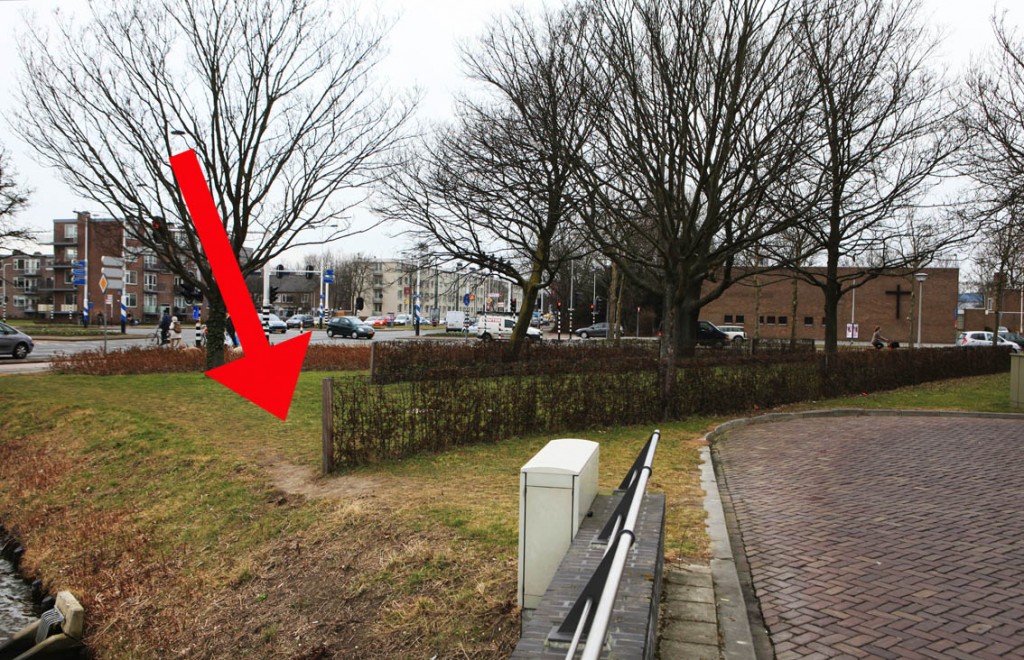
The first time someone explained “usage” to me was accompanied by the example of elephant trails. You know them. You may use them yourself or have even made one at some point. The municipality has built a neat sidewalk, but the most convenient route is just along here, between the bushes. And there you go, off the designed path.

Jan-Dirk van der Burg made a wonderful book about it. On his website he shows how a number of elephant paths are still being hard fought by municipalities, such as in Leiden:

Photo by Jan-Dirk van der Burg of Olifantenpaadjes.nl

Van der Burg writes: “In Leiden, there is an innovative experiment with three parallel hedges, it looks a bit like a military course. The municipality only made a rookie mistake. The hedge just doesn’t connect to the pond area, so then another…”

Photo by Jan-Dirk van der Burg of Olifantenpaadjes.nl

You see: designing something is perfectly possible without considering its use.

But if you want to design human-centered , you can’t avoid looking into how people want to use something and in what context the use takes place. This is true in public spaces, but equally true with products such as electric toothbrushes or government services such as using WIA benefits.

What is usability?

This is the extent to which a system, product or service can be used by certain users to achieve certain goals with effectiveness, efficiency and satisfaction in a given context of use.

Definition usability from ISO standard 9241-210.

When designing products, systems and services, you must consider the people who will use them, as well as people who may be indirectly affected by their use. It is therefore important to first know who these people are. Building systems without understanding who will use it is one of the main causes of system failure. Thus the ISO standard human-centered design for interactive systems.

Whether products or services are useful depends on the context in which they are used. People may have different goals when performing actions with your product or service. In the blog on the principle of “Starting from the whole user experience,” I showed how his-goals, do-goals and tasks relate to each other.

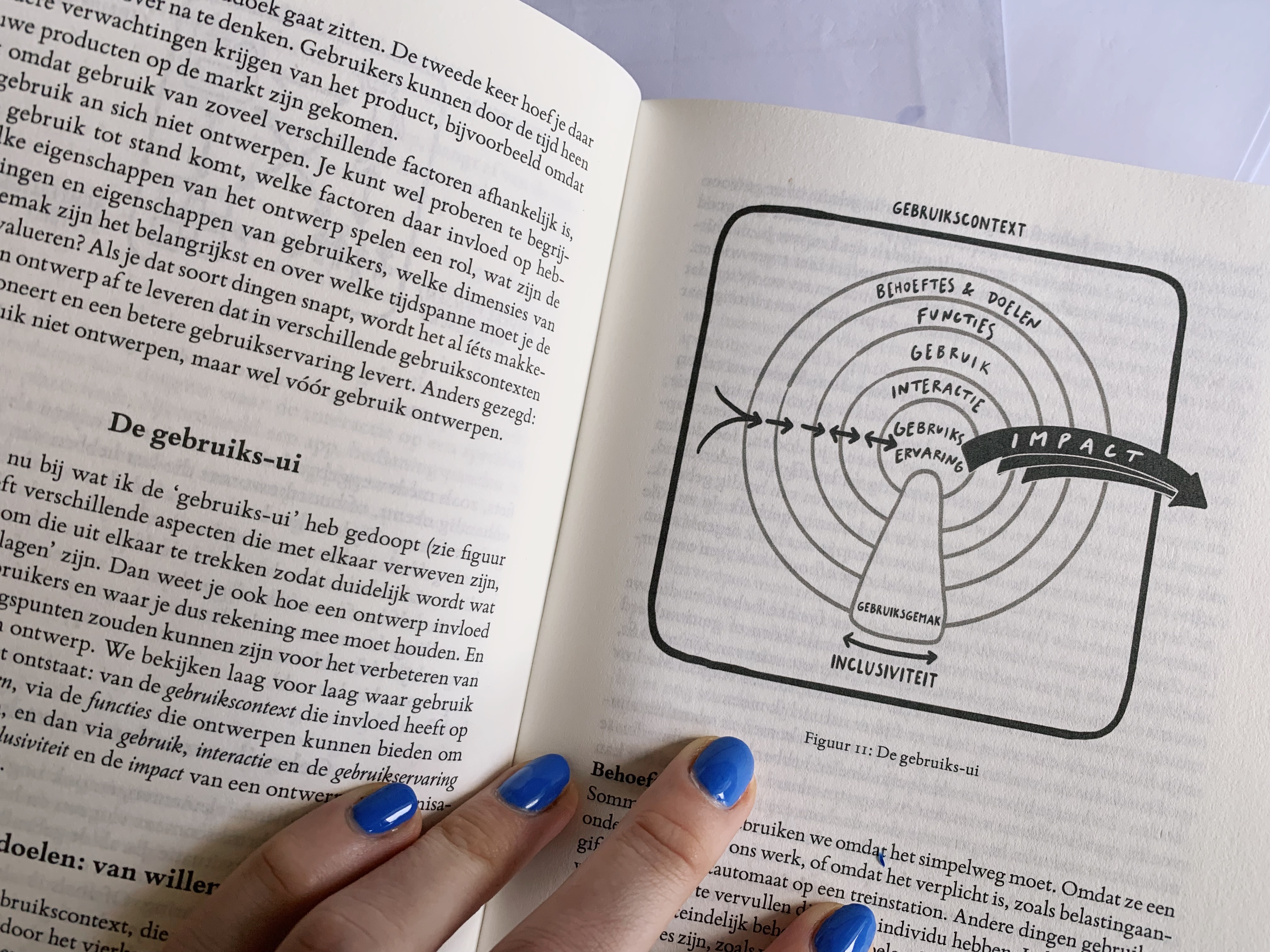
I find that in practice, when people think of usability (or the English “usability”) they often think that buttons should work conveniently on a Web site. But it is much more than that. In his book ‘How easy can you make it’ Jasper van Kuijk explains this with ‘the usabilityui’. Use of a product or service has several aspects that affect each other.

Jasper van Kuijk’s usui from How easy can you make it (2024).

Van Kuijk argues that needs and goals combined with features what a product or service can do makes you use something. Interacting with a product or service allows you to achieve your goal. Next, the user experience is what it does to you while you are using it.

‘Unintended’ additional interactions

An example: in December, my husband and I decided to end our joint business. As real salaried millennials but with creative side hustles, we were also getting a bit older and the side hustles have actually not been around for a while. I went to the site of the Chamber of Commerce, through the drop-down menu to form 17 to deregister a limited liability company. The form needs to be printed, so I to the copy shop in my neighborhood. Then to the Hema for an envelope and then to find out that, yes, on New Year’s Eve the mailboxes are of course sealed, so the whole thing has to be mailed a few days later.

My goal was to write out the vof. A digital function was missing; it had to be on paper. I suspect because of the double “wet” signature. Or perhaps more simply, that digitizing this process is still in the planning stages. However, it significantly affected my user experience. With this, my visit to the Copyshop and to 2 Post-NL points became part of “the customer journey” of the CoC. There was no elephant path, indeed there was a significant detour.

Next, van Kuijk contrasts ease of use with this. This is not a separate layer of usability, but a cross-section of all the above elements. If user experience is what it did to me (emotion), then ease of use is what I could do with it at all (accessibility). Let’s face it: for Henk, my dad, signing out on paper would have been a piece of cake. He has a printer next to his desk with no dried ink and a tray with several sizes of envelopes. And who doesn’t usually start figuring out how to get the job done 1 day before the deadline either. But yes, his daughter unfortunately does.

A design strategy may be to serve the largest group, which is what many commercial companies do. Are there more potential Henks in the target group? Those don’t mind making a print, even make an extra one for their own records. Or are there more Maikes in the target group, then you lose sales if you don’t offer your services differently.

Or as Van Kuijk draws it beautifully in his book with a normal distribution:

Job variation relative to your target distribution. From: How easy can you make it by Jasper van Kuijk (2024).

But different rules apply to the government: they cannot choose who they do and do not serve. They have both Henk and Maike in their target audience. The government has to make services for everyone. I could only achieve my goal with this one organization.

The same principles apply to a variety of other products and services. An extra sink at the McDonalds at kid’s height. An e-reader (without blue light) for when you’re still reading in bed at night. Being able to pay a government fine directly with a QR code. A coffee mug with a handy push button that doesn’t leak when you slam it into your bag. Tikkies! Komoot that reads the route flawlessly and on time, while you are running in the woods and you can foolishly follow the voice. Just some products and services that fit exactly with use in context.

How do they do this?

How do the organizations behind these products and services manage to design them so that not only can people achieve their goals with them, but they are also so tasty to use?

They research how and in what context their product is used. For example, one of my favorite running apps was created by people who are avid runners themselves. They understand me and what I need. But even if you don’t match your user, you can research what someone needs and in what context they use your product or service.

For example, by:

  • Target your audience in their own environment. If you make services for students, walk into a university cafeteria and strike up a conversation. Are you working on services for people in debt? Take the time to hear the stories people are dealing with. Visit people in their own environment instead of hosting sessions in the office. It is precisely in their own environment that you understand how things impact each other. Observe how people use your service. Ask for examples and if they want to show you something, not just tell you about it.
  • Then engage in structured work to map usage information. Do focused in-depth interviews and observe several people while using existing services. Determine what their specific needs are. Fill in Van Kuijk’s usui based on your research. Let this guide the decisions you make during design.

These are also called the first two activities of human-centered design from the ISO standard.

Continue reading?

  • What is human-centered design? All the principles and activities based on the ISO standard at a glance.
  • The usui comes from: J. Van Kuijk (2024), How easy can you make it? Atlas contact.
  • Jan-Dirk van den Burg, 2011. Elephant trails. A series on the tension between planning mishaps and human instinct.
Categories
Human-centered design Promoklip

What is human-centered design?

Next week at the CRI program, where I am doing my practical research this year, I am giving a human-centered design workshop. For the past six months, I’ve been walking through consultations, interviewing colleagues and working on a sub-project myself. This summer I analyzed all the data so far, and starting this summer I will share the insights with the team. Part of that is reflecting about how to apply principles and activities of human-centered design.

This blog is in preparation for that reflection workshop. I was looking for a handy and simple introduction to the subject of human-centered design, which I can of course share with you as well. For my colleagues, I made a nice little clickable blog in which they could put their answers right away, unfortunately you have to make do with static content. There must be a difference of course.

If you want to follow my research, subscribe to my monthly newsletter.

The first entrant

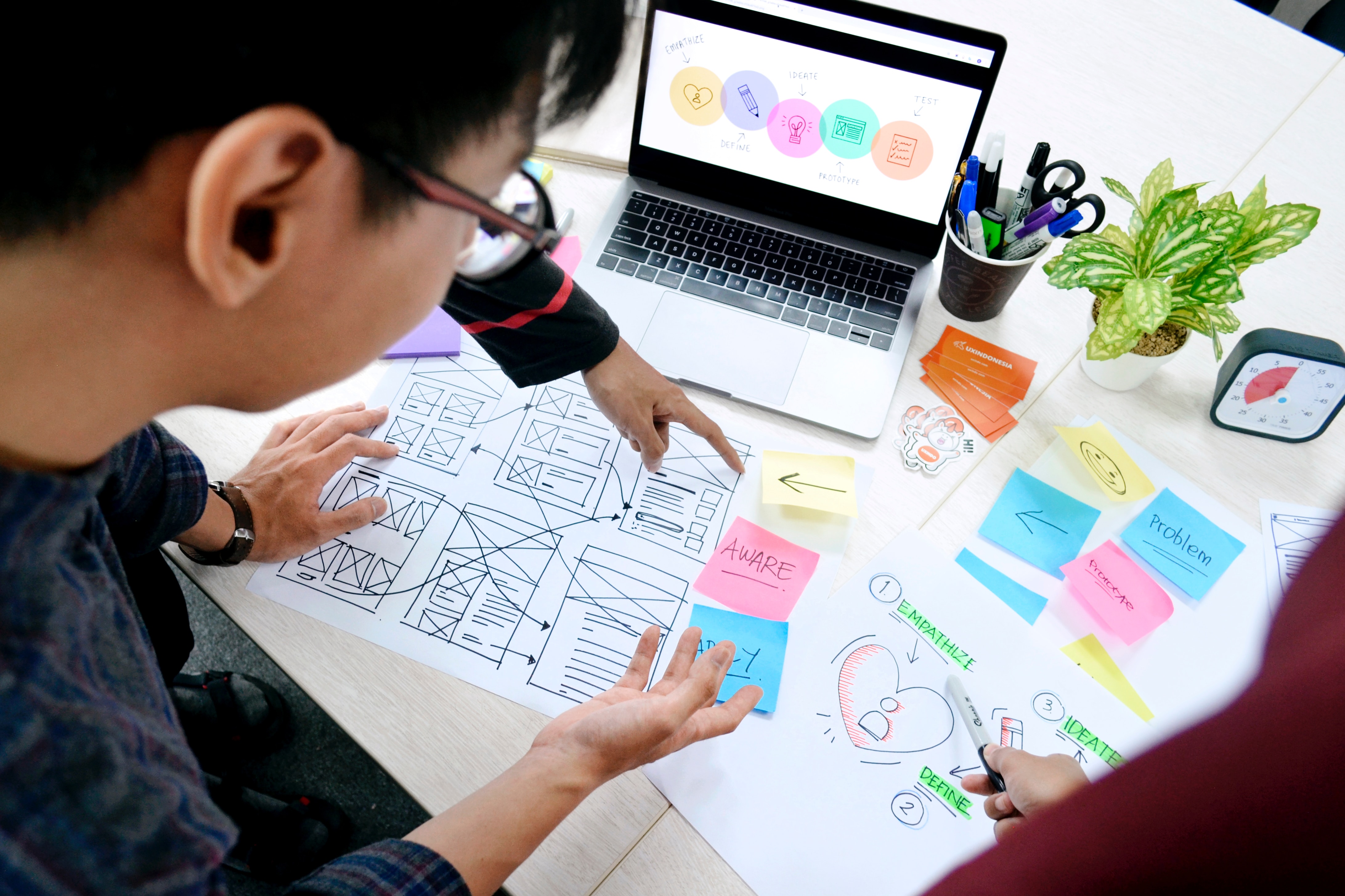
The essence of human-centered design, if you ask me, is still best explained by IDEO, one of the founders of the method (Kelley & Kelley, 2013).

There are many diagrams and pictures that explain the process and principles of human-centered design. Some have 3 steps, others 7. But all have fairly the same cycle. You put yourself in the situation of the person who has a problem, come up with one or more solutions, prototype one so you can test the idea and, again together with the person experiencing the problem, see which solution is the best.

In my research I use the ISO standard human-centered design for interactive systems. I chose this one because it describes the human-centered design process well, and because my research focuses on government services that, for the most part, go through interactive human-computer systems and everything that is involved at the “back end. Think IT systems, organizational processes and public policy.

I used the principles and activities from the ISO standard to compare all observations of the past months and interviews with colleagues. I always looked at what I saw reflected, and which factors helped to work this way and which things did not.

During the workshop, I am especially curious about how colleagues themselves view this.

  1. What do you understand by this principle or activity?
  2. How do you recognize it or not in your way of working?
  3. What do you think works well for you and what doesn’t?
  4. Where do you see room for improvement?

You can also ask these questions in your organization. If anything interesting comes up, I’d love to hear about it!

Principles of human-centered design

In aparte blogs werk ik de komende tijd deze principes die ik in mijn onderzoek gebruik uit:

  1. Wat we maken en bedenken is gebaseerd op een expliciet begrip van gebruikers, taken en hun context.
  2. We betrekken gebruikers continu bij het bedenken en maken van oplossingen
  3. Onze ontwerpen worden geoefend en getest met echte gebruikers, dit bepaalt de keuzes die we maken.
  4. We werken iteratief. 
  5. Onze ontwerpen richt zich op de gehele gebruikservaring van de gehele service.
  6. In ons team zitten mensen met verschillende vaardigheden en perspectieven om samen mensgericht te kunnen ontwerpen.

By the way, a design can be anything. For example, a design for an interactive app in which you can see your debts, or a design for a settlement a citizen can make with the government. Or a design for adapted policies around legal protection.

A design is a potential solution to a problem.

Potentially, because the cool thing about design is that you can try something out. You do that by making an unfinished version of the design (a prototype) that you can test with real users. For example, people in debt, but also colleagues from the helpdesk who are making payment arrangements with a citizen.

If you work from these principles, you should – if all goes well – see that reflected in what you do and what actually happens.

Activities of human-centered design

Human-centered design is an iterative process, a cycle in which the last step restarts the first.

The only step, step 0, that still takes place before that is: planning the human-centered design process. This includes creating preconditions to work this way. The steps after that:

  1. Understand and specify the context of use. This context is both that of the user and all other parties involved in the problem.
  2. Identify the needs of users and other stakeholders. These may include opposing needs.
  3. Creating design solutions. In other words, coming up with solutions to the problem, how they fit the context of the users and what they need, and then developing this into tangible prototypes.
  4. Evaluate the design. You can do this with those tangible prototypes, but also do it over the long term. When solutions are already (partly) implemented, you keep monitoring. You use the feedback to iteratively make it ever more appropriate to the context of use, step 1.

If you would like to read the entire ISO standard human-centered design with all the explanations and definitions, please send me an email.

Resources

ISO. (2019). ISO 9421-210 – Ergonomics of human-system interaction – Part 210: Human-centred design for interactive systems. Geneva, Switzerland, International Organization for Standardization.

ISO. (2023). ISO 9421-221 – Ergonomics of human-system interaction – Part 221: Human-centred design process assessment model. Geneva, Switzerland, International Organization for Standardization.

Kelley, D., & Kelley, T. (2013). Creative confidence: Unleashing the creative potential within us all. Crown Business.

Categories
Promoklip

Trusting the process is not enough

A well-known saying among designers is trust the process. Indeed, since I started working in government 10 years ago, as a designer of (digital) government services for citizens, I have often heard and said that you have to trust the process. In this blog, I tell you why that’s not enough when it comes to government services.

This blog is a summary of my first scientific article “More than the process: exploring themes in Dutch public service practice through embedded research. This article was published at IASDR2023 and you can download it here. Want to follow my research on government services that are good for people? Then subscribe to my newsletter (in Dutch).

About government services

In many Western democratic countries, the state’s job is to provide health care, education, safety and social security. We do this by translating laws and policies into public services. The classic image of a government service is an official with a stamp behind a counter, but today services are increasingly digitized. This has significantly changed the government as an organization and the interaction with government (Bovens & Zouridis, 2002).

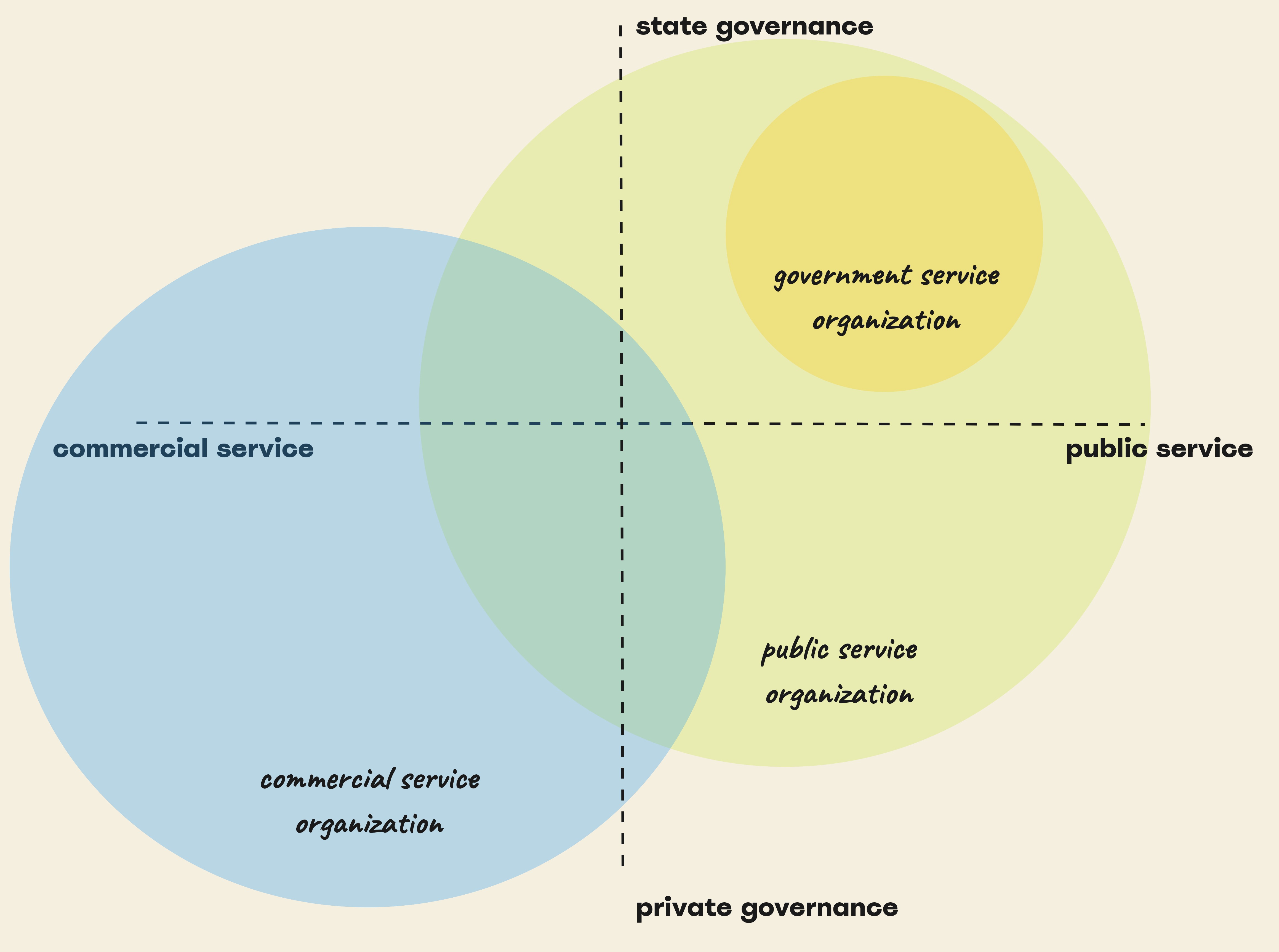
Public service organizations are in in the lead of connecting government (and its laws and policies) with citizens (with their own needs). A public service organization can be 100% government or even completely commercial, or something in between. My research focuses on service organizations that are truly government: government service organizations.

I do my research in the Netherlands. Here we use the word “the implementation” to refer to these organizations, but for a few years now there has been a change. After years of austerity and a few service scandals, the call for more human touch is sounding loudly. This leads to all kinds of change programs to government service organizations within these organizations.

A proven way for delivering human-centered (public) services is to design them human-centered. With the rise of digital services, human-centered design practices have emerged in many government organizations worldwide. But applying this new competence is not without struggle. So write, for example, Bason (2010), Clarke (2020), Downe (2020) and Greenway & Terrett (2018).

What is human-centered design?

Human-centered design is a field that goes back decades. There are now even ISO standards for service excellence (ISO, 2021) and how to design it (ISO, 2019). An important part of this is the service user’s experience. To what extent can users use the service effectively, efficiently and satisfactorily?

There are all kinds of design models for making good services. The common denominator: a combination of divergent and convergent thinking, an iterative way of working and involving users in the design process.

Seven years of blogging in the mix

In 2017, I wrote my first blog about my work to create human-centered services in government. In the archive you will now find a long list of blogs.

Together with my promoters Maaike Kleinsmann and Jasper van Kuijk, I took a close look at all these blogs. We wondered what we can learn from all these practical experiences. What dynamics do we see that affect how government services are made?

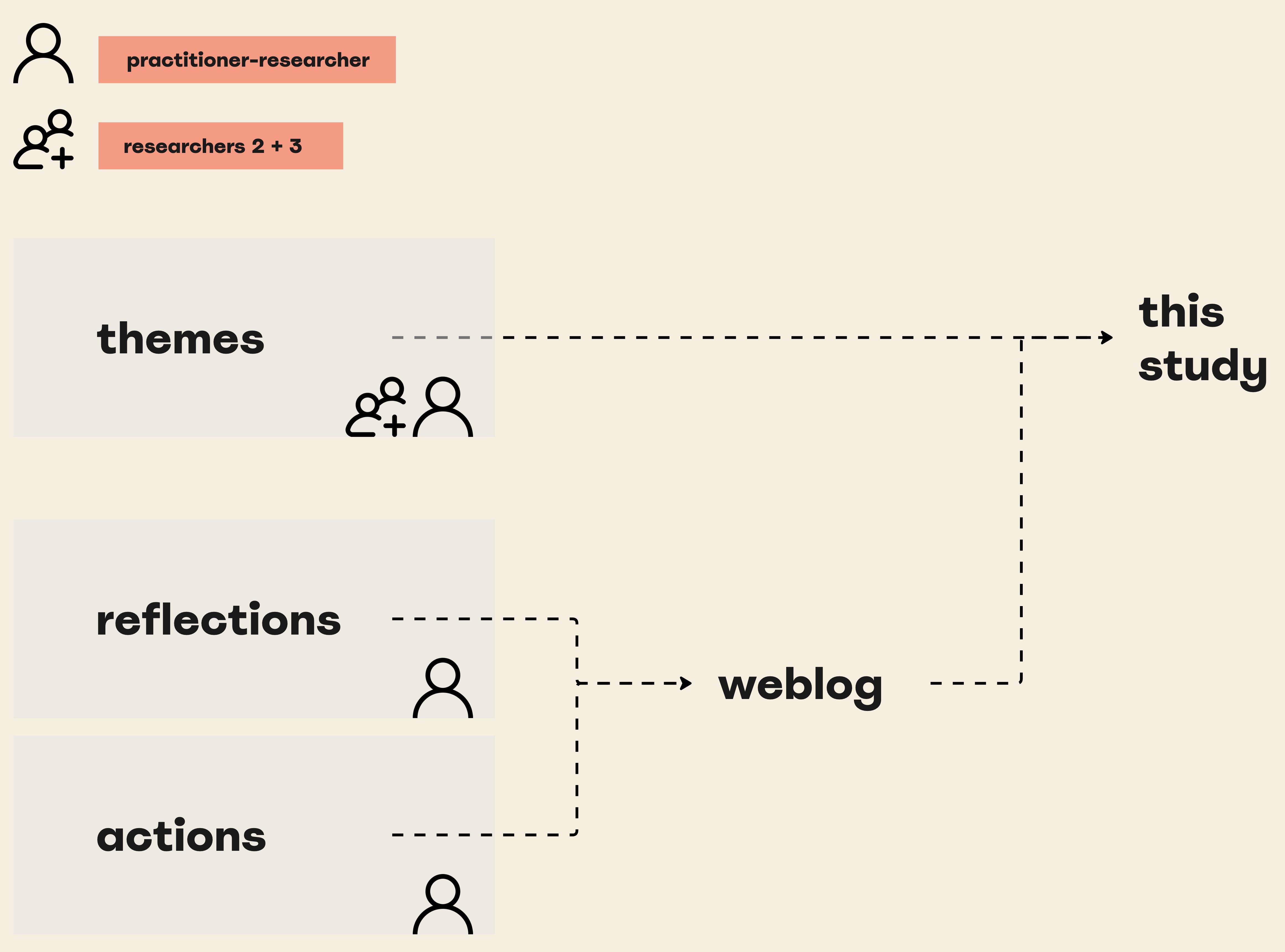
Our research design looked like this schematically:

Schematic research design

We divided all the blogs into four projects that followed each other (in part). I will go through them one by one.

Project 1: setting up a UX research practice at DUO

I wrote the first blog about my work at the Executive Agency of Education (DUO) in 2017, and when I left the team in 2021, I created a summary of all 98 blogs up to that point: the structure of research.

I noticed that the impact of user research remained low. In fact, the process was often finished by the time the user research was done, the website was pretty much done, the system could not be changed, and policy always took precedence.

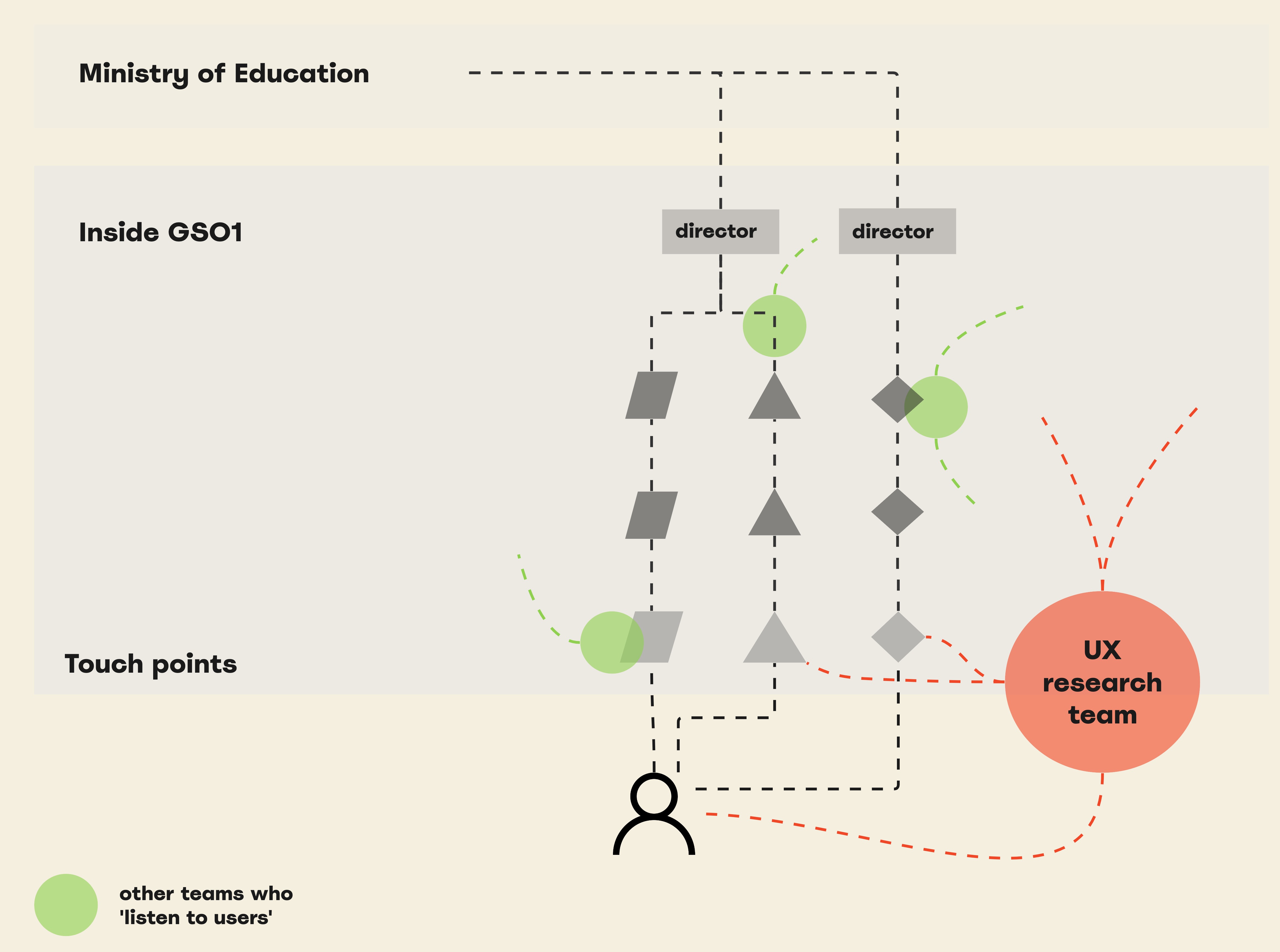
User research did not fit the way development teams worked. There was no overarching direction on user feedback and no tools such as customer journeys to give development teams guidance. To change this bottom-up was a considerable undertaking, and it was not a priority to better structure the governance of this.

You can see the position of the UX research team in the context of the organization in this drawing:

Schematic representation of the organization’s structure and positioning of the UX research team.

Delivering services that meet user needs required taking users’ perspectives into account much earlier in the process, I noticed. Thus was born the next project.

Project 2: The compassionate civil servant

This was the research project for my master’s degree on the role of empathy for citizens among digital government creators, also at DUO. I previously shared the results of this research on debegripvolleambtenaar.nl and you can read the work in progress in detail in the archives of this blog (2018 – 2020).

I used photography to reflect with colleagues. This is how it went:

I had four key insights:

  1. Participants do not know where citizen responsibility ends and government responsibility begins. As a result, they encounter dilemmas they do not know how to deal with. For example, should a loan for young students be very accessible online or contain hurdles?
  2. Participants do not experience space for their own humanity. They should be neutral and simply implement the law, but go through all sorts of things that impact them: reorganizations, political changes, unclear communication and their own insecurity. Reflective conversations lag behind as a result.
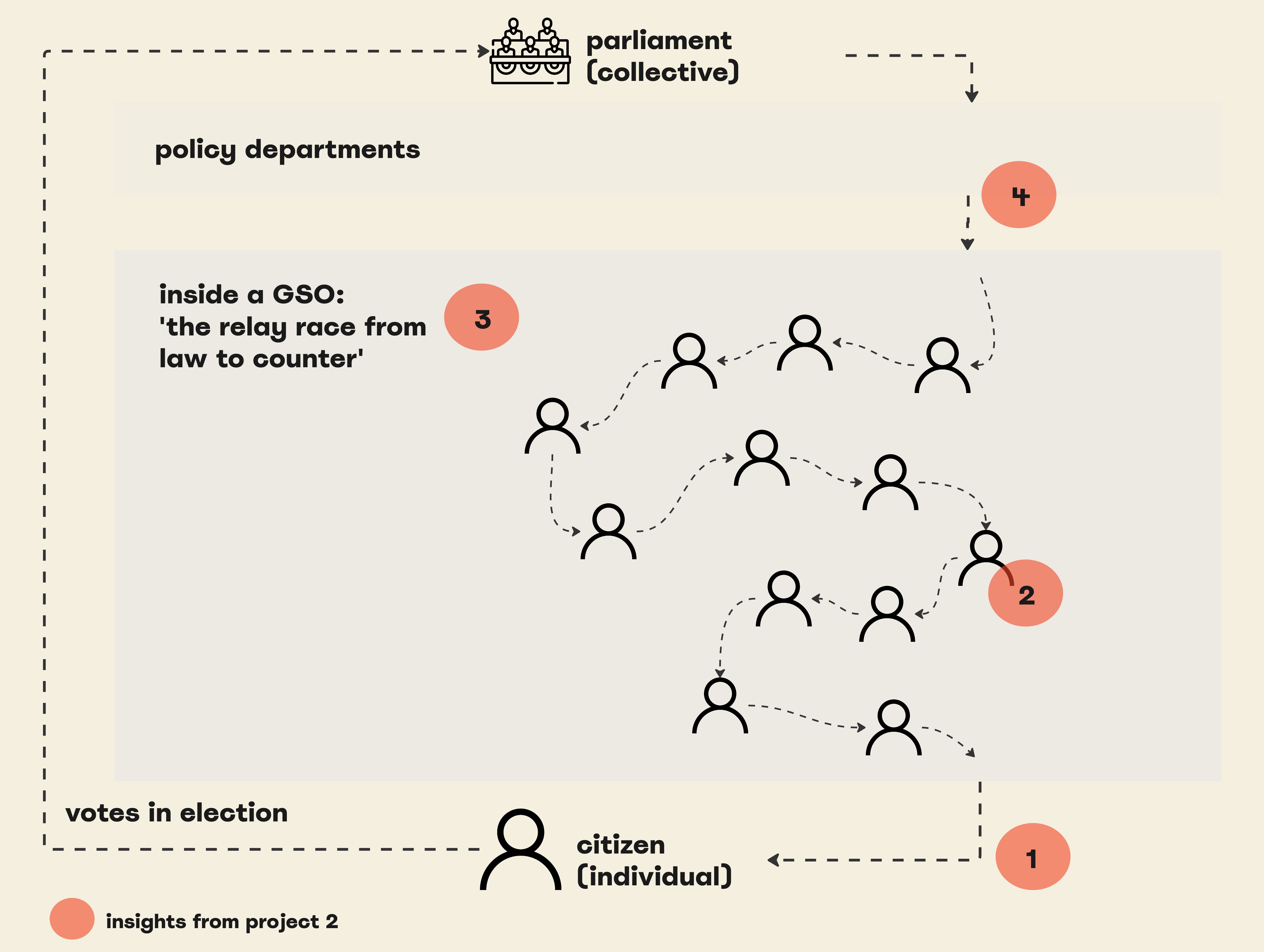
  3. Participants do not have an overview of how citizens experience the service and therefore do not know their part in it. Processes and responsibilities are divided. Each one does his piece and passes the relay baton to the next without knowing exactly how it will proceed.
  4. Participants do not have the skills or feel the freedom to act on feedback from citizens. As a civil servant, you work for the minister and it quickly becomes political, they think. The hierarchy goes from top to bottom: the ministry together with parliament makes the law; the execution executes.

These four insights come into play at different points in the law-to-counter relay, as you can see in this drawing:

Schematic overview of where the four insights impact the law-to-counter relay.

Project 3: the CoronaMelder app

For the app, I did part of the user research at the Ministry of Health. You can read back all the blogs via the tag coronamelder.

I chose the corona app as a counter example of how it can be done. The design and development team came together in a special way, using the Covid crisis conditions to engage users at each iteration. This successful way of working was confirmed by the Dutch ICT Review Advisory Board (2022), among others.

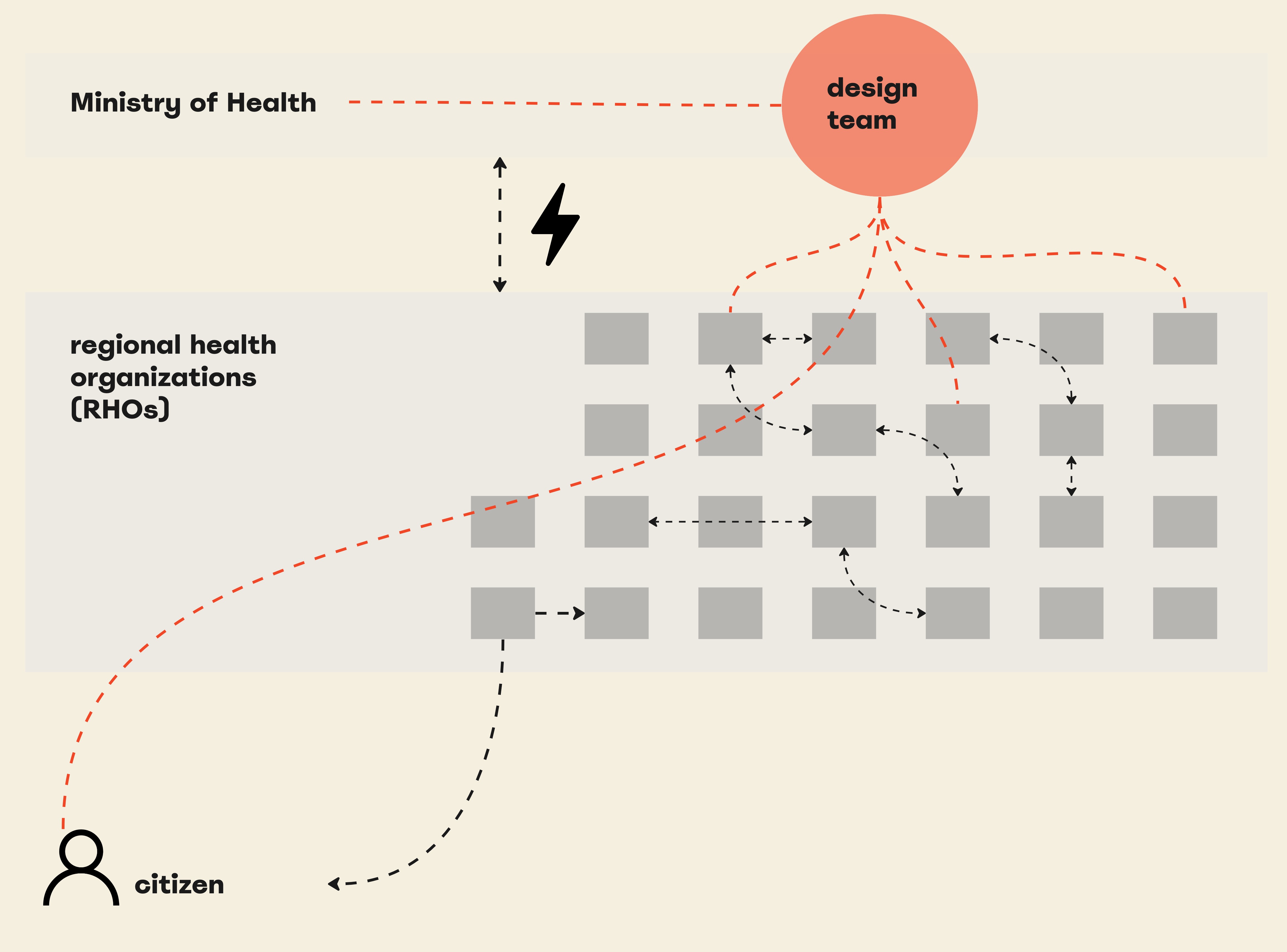
But success shines less when you look at the app not in isolation, but as an interaction point in the entire service, namely source and contact investigation. Responsibilities to combat the coronavirus were divided between the ministry and regional health organizations (RHOs). The dynamics between these organizations led to a less effective app, and this in turn impacted the overall service.

So even though there is a lot of design freedom and users are well involved from the beginning, that does not necessarily make for a successful service. We need more. Apps and services are part of a larger eco-system, as this drawing shows:

Schematic representation of the relationship between the ministry, the 26 RHOs, the user and the design team.

Project 4: A month from my own relationship with the government

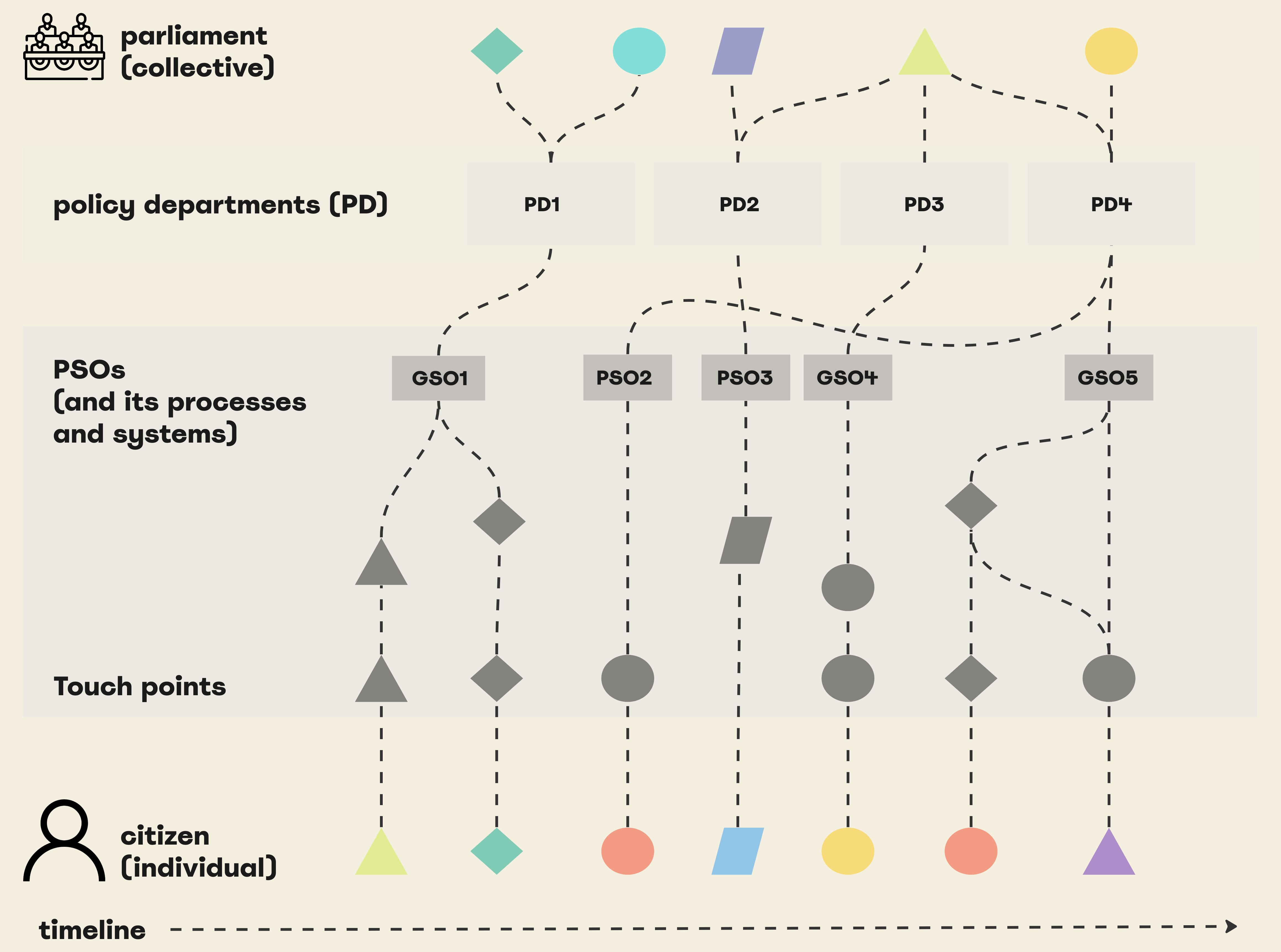
I explored that larger eco-system by keeping track of my own interactions with the government on a large map for a month and mapped the government’s side of it as well. This project was the starting point for my doctoral research. You can go through the map yourself on this Miro board.

Fairly simplified schematic representation of my own relationship with government.

I learned that laws and services for government are always bulk and collective in nature. For citizens, it is always personal. The total of the interaction adds up, as does stress, and citizens soon lose track. After all, you must be a total nerd to want/be able to make such a map :).

The lack of oversight makes it difficult for citizens to manage their relationship with government (Keizer, et al, 2019). Government service organizations do not take this into account because each organization has its own processes, structures and financial flows. There is no overarching responsibility of the entire relationship with the citizen.

The specific dynamics of government services

What can we learn from these government service projects?

  1. There is tension between collective and individual values. What constitutes public value is defined and discussed by political parties, in public debate and in parliament. Project 2 and 4 show that it is left to the government service organization to translate that collective value into individual experiences, without having the skills or guidelines to do so.
  2. Government services should be inclusive for all. Not every citizen has the same ability to manage their relationship with government. Commercial organizations also want to be inclusive, but the government has a monopoly. If you don’t manage as a citizen, you have nowhere else to go. Designing for inclusion means involving a wide variety of users in the design process, but as project 1 shows, this is not standard practice. Fortunately, Project 3 shows how this can be done.
  3. A top-down, hierarchical culture hinders focus on the user. Government organizations operate in a political context (with political reckoning). Read: you work for the minister and less for citizens. Project 1 shows that UX insights were only allowed at the operational level and did not influence strategic decisions of the organization. These dynamics are further explained in project 2. Project 3 shows, because of the team composition and nature of the Covid crisis, that this political culture played a smaller role.
  4. User feedback competes with policy implementation and ICT changes. Changes around policy and ICT are invariably prioritized higher than citizens’ experience with service delivery. In project 1, you see little room for user feedback in the way the organization works. This is further encouraged by the focus on the legal aspect of policy, as shown in Project 2. Project 3 shows precisely that with the right capabilities and priorities, user feedback can play an essential role in how a team works.
  5. Government service providers are part of a larger services eco-system. Organizations are part of an interplay of policy departments and other service providers, some of which have even been privatized. In project 4, you see how each organization makes its own translation of the law (or parts of it) into services and takes no responsibility for the impact of it all on citizens. The culture behind this is explained in Project 2. In Project 3, you can see this in the dynamics between the ministry and the RHOs.

Two outsides

Comparing the outcomes of the projects with the literature on human centered service design, I certainly see opportunities for more human touch in government service delivery. But this is easier said than done.

The theory about (making) good service is unruly in the practice of government organizations. For example, the political hierarchy contradicts with the first principle of service excellence (ISO; 2021): “manage the organization from the outside in.”

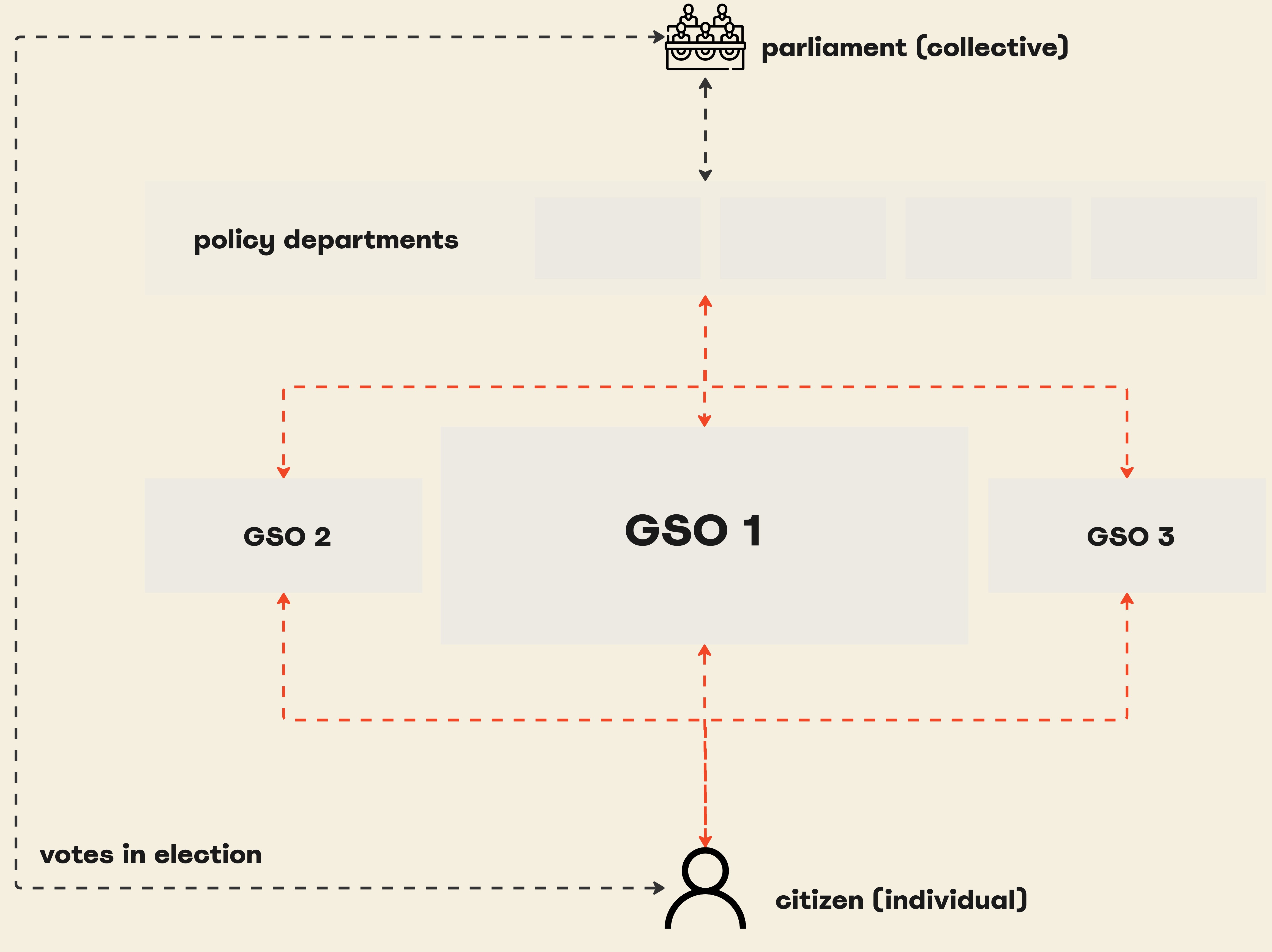
One would then say that we need a 180-degree turnaround in government, but that does not do justice to the democratic nature of government organizations. The challenge for government service organizations, then, is both to manage the organization from the outside in and to be accountable within the democratic context as well, and thus to listen to two outsides. This is what it looks like:

Schematic representation of the service eco-system within which government organizations operate, including the two outsides.

Conclusion

If we want to create truly human-centered government services, we must embrace human-centered design at the strategic level in organizations (Project 1). An organizational culture that enables this is essential for this (Project 2). But even if the organization has the required capabilities (project 3), this does not mean that the entire service is good for people, since government organizations are part of a service eco-system (project 4).

To make service standards and design processes applicable to the context of government service delivery, we need to adapt them to deal with the specific dynamics of government organizations.

When we do this, it will hopefully enable government service organizations to help citizens achieve their goals in life, even if they need different services from different organizations. Government as a whole must work beyond silos, and begin orchestrating the experience of government services for citizens.

What’s next?

Further developing these standards and design processes is, of course, a nice task for me in my doctoral research.

The first thing I want to do in the coming period is to define some concepts further. I use the term government service organization, but the specifics of this can be explored in more depth. I am going to look at it from different perspectives: from the public administration field, the service literature and from the design field. I envision it as a scale that you can start defining from different dimensions:

This fall I am working on this conceptual framework. Then I will create a research design to research in practice how Dutch national government service organizations learn to improve their services.

If you want to know more about this, read on in these blogs about:

References

Bason, C. (2010). Leading public sector innovation (Vol. 10). Bristol: Policy Press.

Bovens, M., & Zouridis, S. (2002). From street-level to system-level bureaucracies: how information and communication technology is transforming administrative discretion and constitutional control. Public administration review, 62(2), 174-184.

Clarke, A. (2020). Digital government units: what are they, and what do they mean for digital era public management renewal? International Public Management Journal, 23(3), 358-379.

Downe, L. (2020). Good Services: How to design services that work. BIS Publishers.

Greenway, A., Terrett, B., Bracken, M., & Loosemore, T. (2018). Digital transformation at scale: Why the strategy is delivery: Why the strategy is delivery, London Publishing Partnership.

Keizer, A. G., Tiemeijer, W., & Bovens, M. (2019). Why knowing what to do is not enough: A realistic perspective on self-reliance (p. 157). Springer Nature.

ISO. (2019). ISO 9421-210 – Ergonomics of human-system interaction – Part 210: Human-centred design for interactive systems. Geneva, Switzerland, International Organization for Standardization.

ISO. (2021). ISO 23592 – Service excellence – Principles and model. Geneva, Switzerland, International Organization for Standardization.

ISO. (2021). ISO 24082 – Service excellence – Designing excellent service to achieve outstanding customer experience. Geneva, Switzerland, International Organization for Standardization.

Adviescollege ICT-toetsing (2022). Evaluatie Ontwikkelproces CoronaMelder. Den Haag, Adviescollege ICT-toetsing.

All 43 references I used in the article can be found here.